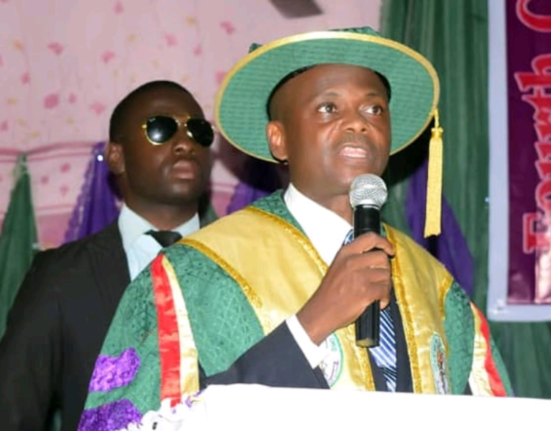
Covenant University’s rise to the top of the 2026 Times Higher Education Interdisciplinary Science Rankings—first in Africa and 49th globally—is more than a trophy moment for the private institution in Ota. It is a mirror held up to Nigeria’s troubled higher education system, showing both what is possible and what must change if the country hopes to compete globally.
Experts say Covenant’s excellence did not happen by accident. It is the product of clear vision, strong governance, disciplined management, and steady funding—four things that many public universities struggle to guarantee. At the heart of its success is CUCRID, the university’s Centre for Research, Innovation and Discovery, deliberately designed to foster a strong research culture. “CUCRID represents a radical shift from what most Nigerian researchers are used to,” one senior university official said, noting its focus on structured research planning, international collaborations and innovation-driven teaching.
Stakeholders argue that this model—goal-driven leadership, protected funding, reliable infrastructure and research-focused culture—can be replicated nationally, but only with deep structural reforms. According to Prof Ayodeji Olukoju, former vice-chancellor of Caleb University, private universities like Covenant show what is possible when institutions are allowed to thrive without political interference. “They are national assets,” he says, “expanding our human capital pool in ways public universities alone can no longer carry.”
For public universities, catching up will require more than occasional injections of capital. The chronic issues—strikes, brain drain, weak research funding and outdated facilities—must be addressed head-on. Lecturers in federal universities confirm that the exodus of academic talent is real. “Mental work is difficult, yet a professor cannot take home half a million naira,” says Dr Stanley Alaubi of the University of Port Harcourt. Others point to poor working conditions, nepotistic recruitment, and inadequate laboratories as reasons top scholars leave.
Covenant University, by contrast, guarantees reliable electricity, water, modern labs, and competitive incentives. Its “town and gown” seminars connect students with industry, while international exposure for staff strengthens the university’s global visibility.
Policy analysts say the lesson for Nigeria is simple: if universities want world-class outcomes, they must operate in world-class conditions. That means funding models that reward performance, governing councils free from political capture, research budgets that match ambition and accountability systems that encourage innovation.
Covenant University’s achievement should not be seen as a private-sector victory alone. It is a national wake-up call—proof that Nigerian universities can compete globally when given the right environment. The next move belongs to policymakers.