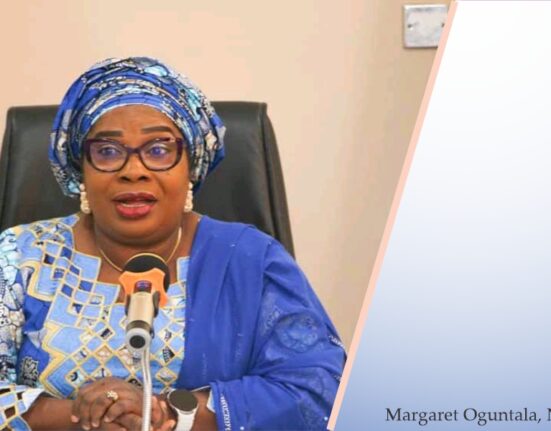
The President of the Council for the Regulation of Engineering in Nigeria (COREN), Professor Sadiq Zubair Abubakar, has expressed concern regarding the federal government’s recent directive banning certain professional bodies from conducting independent accreditation within the Nigerian University System (NUS).
Professor Abubakar made the remarks at the 5th Engr. U. G. Jibrin Distinguished Annual Public Lecture held in Abuja on Saturday. The lecture, themed “Effective Engineering Administration as Panacea for Building and Infrastructure Collapse,” provided a platform for discussing key issues affecting engineering and infrastructure in Nigeria.
Last week, the Federal Ministry of Education issued a directive prohibiting multiple accreditation of academic programmes in Nigerian universities by professional bodies operating independently of the National Universities Commission (NUC).
The directive was communicated in a letter dated May 20, 2025, signed by Jubril Abu Momoh, Acting Director of the Executive Secretary’s Office at NUC, and addressed to all vice-chancellors.
The letter referred to an earlier communication from the Ministry of Education dated May 9 2025, which highlighted concerns about the increasing trend of independent accreditation by various professional bodies. The Minister of Education approved that, henceforth, all professional bodies should cease conducting independent accreditation of academic programmes in universities.
However, the government granted exemptions to seven regulatory bodies, allowing them to continue their accreditation activities in collaboration with the NUC. These bodies are the Medical and Dental Council of Nigeria (MDCN), Council of Legal Education of Nigeria (CLE), Nursing and Midwifery Council of Nigeria, Pharmacy Council of Nigeria (PCN), Veterinary Council of Nigeria, Council for the Regulation of Engineering in Nigeria (COREN); and Architects Registration Council of Nigeria (ARCON).
In his goodwill message at the event, Professor Abubakar emphasised that accreditation by professional bodies is recognised as a global best practice to ensure quality and standards in university programmes. He urged engineering professionals to consider the policy’s implications for the engineering profession and the nation’s development.
Professor Abubakar lamented that despite having over 30 professional regulatory bodies tasked with accreditation, many lack adequate funding to carry out their responsibilities effectively.
He stated, “The university system has been inundated by the 33 regulatory bodies in the country to discharge the legal mandate of accrediting professional courses both in the university system and vocational-technical institutions. This is necessary to align with global best practices and ensure global benchmarking and mobility for our professionals. Unfortunately, the system lacks sufficient funding to execute this mandate effectively.”
He further observed that only six regulatory bodies received waivers to continue independent accreditation, describing this as a recognition of their priority in maintaining professionalism and adding value to training and practice in Nigeria. Professor Abubakar called on engineering leaders to unify their voices and work together to uphold effective engineering administration and global standards.
Also speaking at the event, Engineer Kashim Ali, former President of COREN, questioned the authority of the Ministry of Education to restrict professional bodies from performing accreditation functions. He argued that ceasing accreditation activities would undermine the global recognition of Nigerian engineers. He described the decision as “unreasonable” and insisted that no waiver should be required for professional bodies to fulfil their mandate.
Engineer Ali highlighted the recent shutdown of the Port Harcourt Refinery and raised concerns about the condition of other refineries, including Warri and Kaduna. He stressed the importance of engineering bodies being proactive in identifying potential infrastructure failures and reporting them to the government to prevent collapse.
“We must take engineering seriously,” he said. “Engineering organisations should gather information and alert the government ahead of time to avert such crises.”