In many Nigerian universities today, the lecture hall is losing its audience. While lecturers struggle to keep students focused on coursework, many undergraduates are now focused on a different kind of assignment — freelance jobs that pay in dollars.
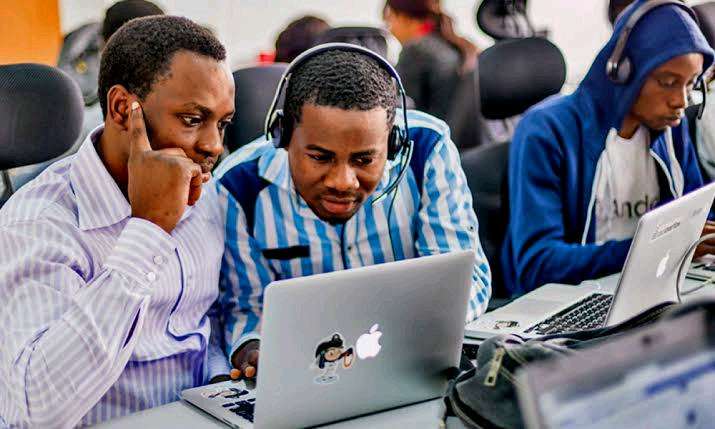
For this generation, the new classroom is their laptop screen. Instead of taking notes on economics or sociology, they are bidding for clients on Upwork, designing logos for businesses in the U.S., or running social media campaigns for brands in Lagos.
“I cannot depend on a degree that might not guarantee a job,” says David, a 300-level student of the University of Lagos who earns from content writing. “I have friends who graduated two years ago and are still job hunting. I would rather start early.”
This sentiment echoes across campuses nationwide. According to data from the National Bureau of Statistics, the youth unemployment rate stood at 4.3% as of 2024; however, experts have noted that underemployment and job insecurity remain high. With inflation biting hard and parents struggling to keep up with tuition, students are finding solace and survival in the digital economy.
Education analysts, such as Dr Adaora Nwosu, an economist and skills development consultant, believe the trend is both a reflection of economic reality and a failure of the system. “Our universities are not preparing students for today’s market. Most courses still teach theories from the 1980s while the world has moved on to AI, digital marketing, and data analytics,” she explains.
While the hustle is paying off for some, it also comes with risks. Many students skip classes, perform poorly academically, or even drop out entirely. Professor Tunde Abiodun of the University of Ibadan worries that “the craze for quick digital income is breeding half-baked graduates who lack discipline and long-term vision.”
Still, the movement shows no sign of slowing. From graphic design to crypto trading, students are earning in foreign currencies and living more comfortably than their peers.
The real challenge, experts say, is not to discourage freelancing but to integrate it into the education system. “We need a model where students can study and earn without losing sight of either,” says Nwosu. For many Nigerian students, the race is no longer for grades — it is for gigs.