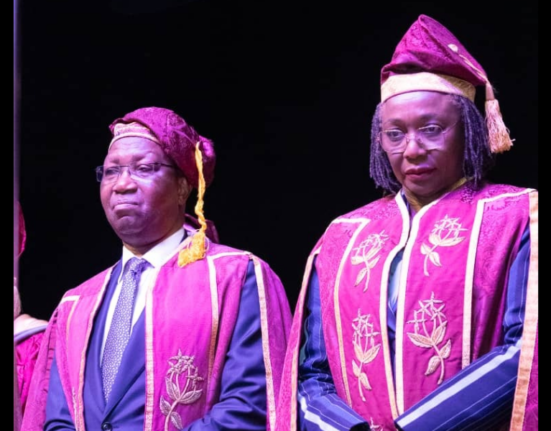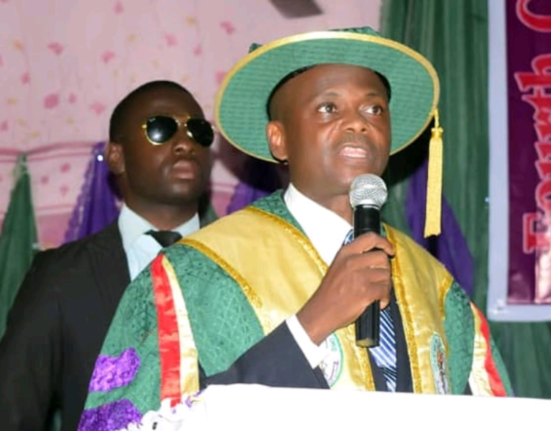
Rear Admiral Abdullahi Ahmed, Commandant of the National Defence College (NDC), with EFCC Chairman Ola Olukoyede in Abuja
When the Commandant of the National Defence College (NDC), Rear Admiral Abdullahi Ahmed, admitted openly that the institution’s curriculum is outdated, he echoed a longstanding warning that has trailed Nigeria’s defence architecture for years. During his recent courtesy visit to the EFCC in Abuja, Ahmed said he discovered that the curriculum “has not been reviewed for quite some time” and no longer matches the threats the country faces today.
His statement is more than an observation—it confirms a problem that defence experts have repeatedly raised. Moreover, it aligns strongly with a similar alarm sounded by Brigadier General Emmanuel Emekah, the former Director of Military Training at the Nigerian Defence Academy (NDA), three years earlier.
A Longstanding Problem Finally Acknowledged
Three years ago, Emekah revealed that the NDA had only just modified its curriculum to start training cadets on tackling bandits, Boko Haram, and other violent groups. Before that modification, cadets were trained almost entirely for conventional warfare, even though Nigeria had been dealing with terrorism and asymmetric warfare for over a decade.
Emekah said the military was forced into a “paradigm shift” because modern threats had rendered old training methods obsolete. He admitted that some of the skills cadets were learning were things officers only discovered later in their careers, rather than mastering during basic training. His remarks shocked many Nigerians, who wondered why an institution as important as the NDA had waited so long to update its syllabus despite the country’s worsening insecurity.
Rear Admiral Ahmed’s new concerns about the NDC—Nigeria’s highest strategic training school—now show that the problem persists at even the topmost levels of military education. Both men’s statements, though separated by years, highlight a disturbing pattern: Nigeria’s military institutions have been slow to adapt to modern realities.
Global Trends, Local Delays
Modern militaries across the world, especially in advanced nations, have long embraced training in counter-terrorism, intelligence fusion, cyber security, drone operations, financial crime intelligence, and maritime domain awareness. Even African countries like Kenya and Egypt regularly update their defence curricula to respond to evolving threats.
Nigeria, however, is playing catch-up. While global defence colleges teach officers about cryptocurrency-enabled terror financing, artificial intelligence in warfare, real-time threat mapping, and irregular combat tactics, Nigeria’s top defence institutions are still reviewing outdated materials.
This is why Rear Admiral Ahmed’s call for collaboration with the EFCC is fundamental and makes sense. It shows an understanding that national security is now intertwined with financial crimes and emerging technologies. EFCC chairman Ola Olukoyede noted that fraud patterns, maritime crime, cryptocurrencies, and governance failures all shape modern conflict—and must be part of military training.
Why the Curriculum Is Still Outdated
Defence experts cite several reasons for the slow pace of reform. Bureaucratic delays have been a significant challenge, making curriculum updates difficult, while old traditions and outdated mindsets still dominate major institutions. Nigeria also responded late to insurgency signals, even though terrorism signs were visible as far back as the 1980s. The military has also struggled to turn battlefield experiences into classroom lessons, leaving many officers to learn crucial counter-terrorism skills only after deployment.
The consequences are severe. Soldiers often arrive at conflict zones without complete training in anti-ambush manoeuvres, IED recognition, convoy protection, and the tenets of counter-insurgency—skills that modern militaries treat as foundational.
A Turning Point—If Nigeria Moves Quickly
The renewed effort to update the NDC curriculum signals progress, but experts insist that action must follow quickly. Ahmed’s remarks and Emekah’s earlier warning are two sides of the same truth: Nigeria cannot win modern battles with outdated training frameworks.
For a country facing terrorism, banditry, kidnapping, cybercrime, and complex financial threats, the message is clear. A modern military cannot be built on old knowledge.
Nigeria’s security readiness now depends on how urgently it modernises training at every level—from cadet schools to strategic defence colleges.