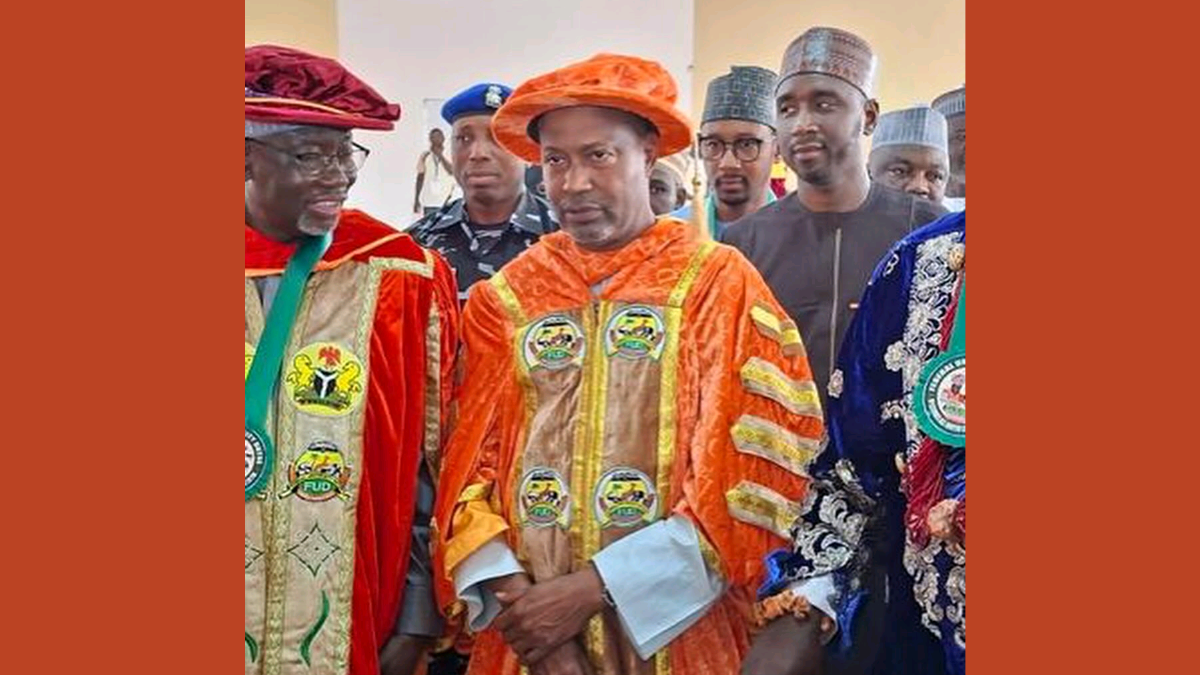
Professor Abdullahi Ribadu, NUC’s Executive Secretary
A few months ago, the National Universities Commission (NUC) announced that it had approved 11 new universities. This means that between 2023 and 2025, about 50 new universities have been approved for operation in Nigeria.
What was intended as a bold move to expand access to higher education has now raised serious questions about quality, regulation, and political motivation.
In its latest round of approvals, the NUC granted provisional licences to 11 private universities on April 30, 2025, bringing the total number of universities in the country to 298. This marks the third wave of new licences within two years — part of the Federal Government’s ongoing push to open up the sector to more private participation. On the surface, the move appears progressive. However, within academic circles, it is being viewed with deep scepticism.
The Academic Staff Union of Universities (ASUU) has been one of the most vocal critics. The union’s Zonal Coordinator in Bauchi, Professor Namo Timothy, described the approval spree as “a political exercise rather than an academic reform.” According to him, many of the newly licensed universities lack the structure, staff strength, and facilities required for effective learning.
“These new universities are nothing more than political constituency projects,” he said. “Everyone wants a university in their village, even if it is just two buildings and borrowed classrooms. A university is not a primary school; it is an academic institution that must be built on substance, not sentiment.”
Professor Timothy also warned that Nigeria’s current approach could undermine the integrity of its entire higher education system. “You do not just build two classrooms and call it a university. Go to Ghana or other West African countries and see what real university standards look like,” he added.
However, not everyone agrees with ASUU’s position. The promoter of the proposed Isaac Balami University of Aeronautics and Management, Mr Isaac Balami, argues that Nigeria’s rapidly growing youth population makes the creation of more universities unavoidable.
“Every year, millions of Nigerian youths write WAEC and NECO, and about two million apply for university admission through JAMB. Only a fraction gets in. We cannot ignore that reality,” Balami explained. “The issue is not whether we should have more universities, but whether we are building the right kind.”
Amid the growing debate, Dr Olatunji Alausa, the Minister of Education, intervened in February 2025, instructing the NUC to impose a one-year moratorium on the establishment of new private universities. The NUC’s Executive Secretary, Professor Abdullahi Ribadu, announced that the Commission would review its guidelines and strengthen quality assurance before issuing further licences.
While the moratorium may slow things down, the big question remains: can Nigeria strike a balance between access and quality? Until that balance is achieved, the university boom may continue to produce more campuses—but not necessarily better education.