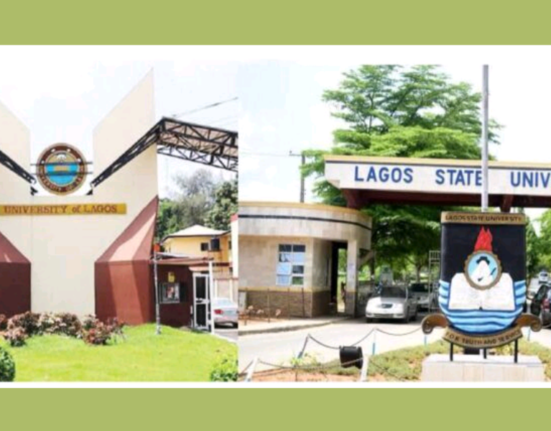
Students of the University of Lagos (UNILAG) protested over the state of their hostels
Hostels are meant to be a safe place for students to rest, think and learn. However, in many public universities today, the story is different. Instead of comfort, students say they now live in fear, dirt and congestion. What should be part of a conducive learning environment has become a significant source of frustration. From Lagos to Sokoto, Benin to Nsukka, the cry is the same: the hostels are in terrible shape.
A few months ago, students of the University of Lagos (UNILAG) and the University of Calabar (UNICAL) protested over the state of their hostels, which included broken windows, damaged doors, smelly toilets, and overcrowded rooms. “The rats are our biggest problem,” said Linda Ovo, a 400-Level student of the University of Benin (UNIBEN). “They eat our food and defecate on it.”
Overcrowding makes everything worse. Rooms built for six students now take more than 10. Squatters—illegal occupants—flood the rooms, putting pressure on already failing facilities. At UNN, Emeka Chukwuka described his male hostel as “terribly congested” with an odour that can make someone sick.”
For many students, these conditions are not just uncomfortable—they are unhealthy. Toilets in some schools are so bad that students defecate in nylon bags and throw them behind the hostels. A cleaner at UNIBEN, Mama Omoye, lamented: “Some students dey shit inside dustbin basket. Some go even shit for bathroom.”
Nevertheless, students say they are not to blame. They insist that management has abandoned its responsibility. “Why do we never hear of rats disturbing lecturers in their offices?” asked Matthew Oghenekaro of AAU. “It is because those offices are maintained. Nevertheless, student hostels are ignored.”
Experts agree that part of the crisis stems from population growth. Prof. Yemi Adeoti, a lecturer, recalled that in the 1970s and 1980s, two people would often stay in a room. “Today, the number has tripled, but facilities have not increased.”
Water scarcity is another major factor. UNIBEN SUG President, Raymond Omorogbe, said dirty toilets persist because there is a lack of water. Boreholes and wells exist, but unstable electricity makes them unreliable.
The consequences are severe. “How can you read in a place that smells like this?” asked Clifford Ibekwe of UNILAG. “It affects our academic performance.”
Students want authorities and corporate organisations to step in. They argue that companies sponsoring entertainment shows should also invest in hostel renovation.
As Sarah Ogbewi of UNIPORT put it, “If they help fix our hostels, the standard of education will rise. We need support, not shows.”