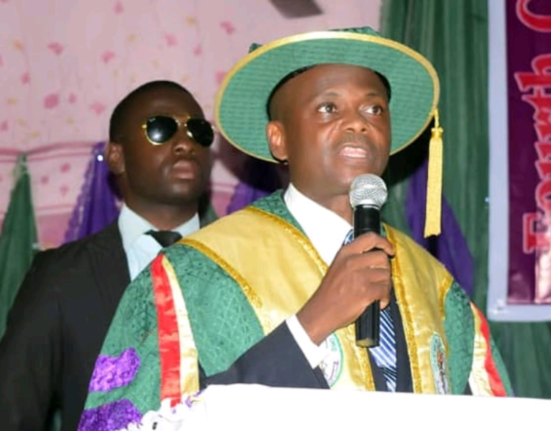
Mallam Abdulfatah Ahmed, former Kwara State Governor
Yesterday, the University of Ilorin’s main auditorium came alive as various stakeholders, including a large number of alumni, gathered for the Institution’s 50th anniversary. Indeed, the anniversary celebration felt like a carnival—tents fluttering, old classmates embracing, lecturers smiling with pride. Nevertheless, beneath the festive atmosphere, a serious conversation about the urgent need for Nigerian Universities to embrace a “Glocalisation” model in their academic and administrative content continued.
This topic took centre stage when former Kwara State Governor, Mallam Abdulfatah Ahmed, stepped up to address the crowd. His tone was warm but firm, carrying the weight of someone who has seen Nigeria’s talent drain accelerate over the years. “Our universities risk losing relevance if they chase global prestige while ignoring local realities,” he warned, drawing nods from students and academics alike.
Abdulfatah spoke passionately about “Glocalisation”—a model where universities blend global knowledge with local needs. He painted a picture many attendees found inspiring: “Imagine a university where students master artificial intelligence and data analytics, but also understand the realities of Nigerian farming, public health, transportation, and climate change.” His voice softened as he added, “This is not abandoning who we are; it is fulfilling who we are meant to be.”
Around the world, top institutions are already doing this. Stanford University, for instance, does not just sit on its global reputation—it works hand in hand with the Silicon Valley community. Through its Office of Community Engagement, researchers sit with local leaders to address issues such as water affordability, youth empowerment, and environmental sustainability. “We help Stanford be more than the sum of its parts,” says Megan Swezey Fogarty, the office’s leader. “Real impact starts with the people next door.”
Oxford University mirrors this model in the UK. It is Laidlaw Scholars that runs after-school clubs for children in disadvantaged communities. Its Local Policy Lab collaborates with local governments to design evidence-based policy. Moreover, programmes like Science Together invite ordinary residents to co-create research with academics. For Professor Alexander Betts, Oxford’s Local and Global Engagement Officer, it is simple: “A university should matter to the people who live around it. That is where global relevance begins.”
Can Nigerian universities do the same? Many experts believe so. Education strategist Professor Funke Adeyemi argues that Nigerian institutions have the talent—they just need the partnerships. “We need universities working with industries, governments, civil groups, markets, farms—everywhere Nigerians live and work. That is how you prepare students for the world.”
Alumni, too, have a critical role. From mentorships to research funding to industry linkages, stakeholders agree that Nigerian graduates scattered across the world form a powerful bridge between global opportunities and local development.
For students at Ilorin that day, Abdulfatah’s message hit close to home. Many are eager to stay, to build, to contribute—but only if universities equip them with tools for both global competitiveness and local relevance. As one student whispered to her friend, “If we learn for Nigeria and the world at the same time, maybe we will not all be rushing out.”
As the celebrations drew to a close and the sun dipped behind the Senate Building, Abdulfatah left the audience with a final challenge: “A glocal university is rooted yet reaching, “he said, adding that efforts must be made by all stakeholders to build institutions that honour the past, shape the future, and can make Nigeria a home for both talent and opportunity.
His words lingered in the evening air—a reminder that the future of Nigerian universities may depend on how boldly they embrace both the local soil beneath their feet and the global sky above their heads.