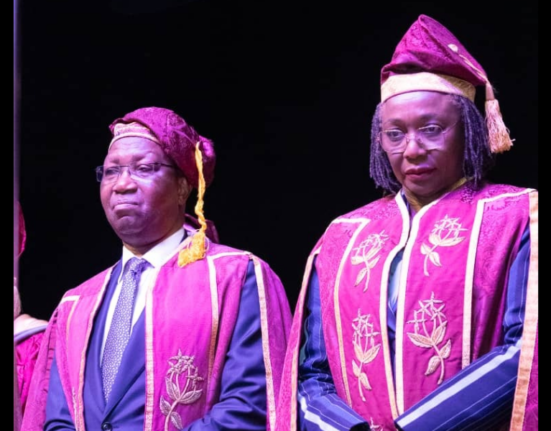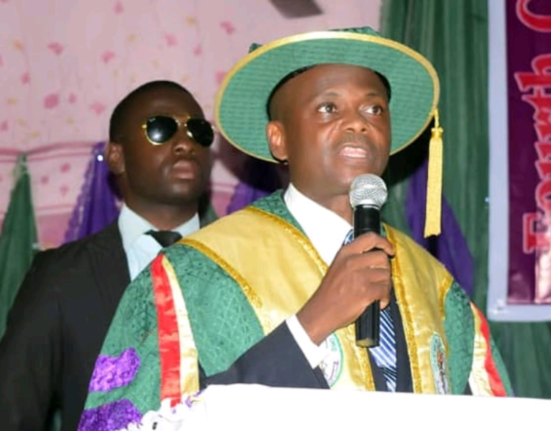
Dr. Tunji Alausa, Minister of Education
Long before today’s arguments about the language of instruction in Nigerian schools, one Nigerian professor had already answered the question in a quiet classroom in Ile-Ife. More than 50 years ago, Professor Babatunde Fafunwa ran an experiment that would later become one of Africa’s strongest pieces of evidence on how children learn. However, as the Federal Government recently reversed the National Language Policy and restored English as the official teaching language, it feels as though the country has forgotten the lessons of that historic research.
The new policy reversal has reopened one of the most emotional — and most misunderstood — debates in Nigerian education: Which language truly helps a child learn better?
For the Minister of Education, Dr Tunji Alausa, the answer is simple. He insists that using mother tongues in primary schools has contributed to poor performance in WAEC, NECO and JAMB. According to him, “evidence-based governance” requires a return to English. However, many experts believe that Nigeria is overlooking the most crucial evidence of all — Fafunwa’s discoveries.
The Experiment That Changed Everything
Between 1970 and 1978, at the University of Ife, Fafunwa and his team taught one group of pupils entirely in Yoruba for six years. English was introduced only as a subject. Another group followed the normal English-medium system.
The results shocked everyone.
The Yoruba-taught pupils performed better in Mathematics and Science. They understood lessons more deeply and asked more questions. They later performed just as well — and sometimes better — in English.
Fafunwa’s research showed something simple but powerful:
Children learn faster when the language of instruction is the same language they think in. He proved that mother-tongue learning does not block English; it actually builds the foundation that later strengthens it.
The World Has Since Confirmed What Fafunwa Saw Early
Across Finland, India, South Africa and Ethiopia, global research echoes the same message. Countries that begin early learning in the mother tongue produce children who read more quickly, solve problems more effectively, and later speak foreign languages with greater confidence.
As one Indian linguist put it, “A child learns concepts, not words. The mother tongue carries the concept more clearly.”
That is precisely what Fafunwa demonstrated decades ago.
Nigerian linguists agree. Dr Ahmed Yaya of FUDMA often cites Fafunwa’s findings. In Akwa Ibom, Dr Monday Effiong reminds policymakers that learning in a familiar language strengthens later English proficiency, not the other way round. Psychologists add that children interpret the world in the language they hear at home. Asking a child to learn new knowledge in an unfamiliar language is like giving them a bicycle with one missing tyre.
Nigeria’s Challenge Is Not the Idea — It Is the Implementation
With over 600 languages and inadequate teacher preparation, Nigeria has consistently struggled to implement mother-tongue instruction effectively. Many teachers are unable to read or write the local language. Textbooks are missing. Classrooms are multilingual. The system is confused, not because the science is wrong, but because the structure is weak.
As Prof. Inem Akpan warns, if teachers and materials are not ready, “language must not become another barrier.”
So, What Unlocks a Child’s Brain?
The research — from Ile-Ife to Finland — suggests starting with the mother tongue and then transitioning into English.
However, Nigeria’s own experience adds a painful footnote: Without training, preparation, and investment, even the best scientific truths will fail. Fafunwa showed the way.
Nigeria must now decide whether it will finally follow it.