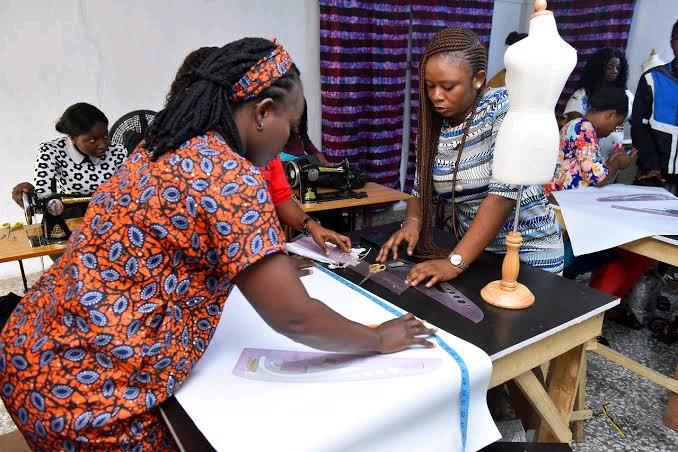
To tackle the growing unemployment crisis and address skill shortages, Nigeria prioritises vocational education as a key solution.
With millions of graduates struggling to secure jobs, the government believes that vocational training, backed by its new student loan scheme, offers a promising alternative to traditional university education.
The emphasis is now on hands-on skills in trades such as carpentry, ICT, plumbing, construction, agriculture, and renewable energy, where the country faces a significant shortage of qualified professionals.
To boost enrolment in vocational schools, the Ministry of Education plans to revamp its technical and vocational education training (TVET) scheme in late 2025.
Vocational education in Nigeria spans polytechnics, mono-technics, and innovation institutes, while technical colleges and apprenticeship schemes also play key roles.
The National Board for Technical Education (NBTE) has introduced a funding scheme to pay young Nigerians to learn, while vocational entrepreneurs will receive financial support to mentor trainees.
This initiative aims to help align Nigeria’s human capital development with local and international labour market demands.
Data from Nigeria’s National Bureau of Statistics (NBS) reveals that, as of early 2024, 14.5% of Nigerian youth were neither in education nor in employment.
Despite slight improvements in youth employment figures, underemployment remains a significant challenge. Informal sector employment dominates, making up 92.2% of the workforce in 2023.
Employers face a paradox in Lagos: There are many job vacancies, but many applicants lack the necessary skills and experience.
Nigeria’s universities are facing increased pressure to align their curricula with market needs, which is pushing more young Nigerians to consider vocational and technical training.
In 2021, Collins Ojoghoro enrolled in an electromechanics programme at the Institute of Industrial Technology (IIT) in Lagos. By graduating in 2024, he was already employed as a West African engineering company field technician. His success story highlights the value of practical skills over traditional university degrees, with Ojoghoro earning a salary of N900,000, much higher than most entry-level graduate positions in Nigeria.

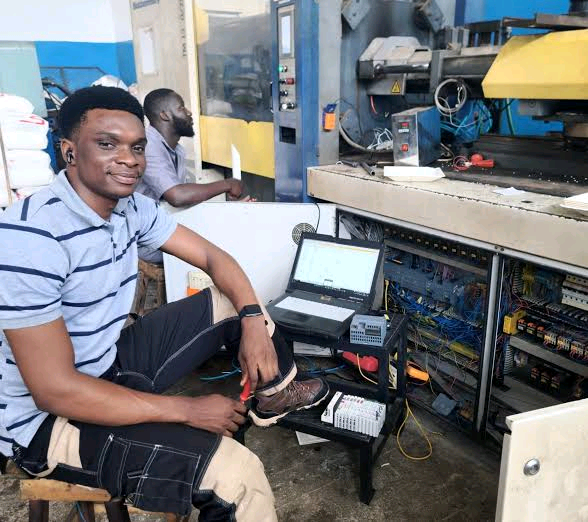
The IIT is one of over 90 vocational institutes in Nigeria, most privately owned. Despite inadequate funding and equipment in some government-run institutions, private vocational schools have remained pivotal in providing uninterrupted vocational education.
The NBTE is introducing the National Skills Qualification (NSQ) framework to strengthen the sector further, creating a tiered certification system for craft professionals.
This move aims to improve vocational education standards and ensure graduates are adequately prepared to meet industry needs.
Experts predict that job markets will evolve globally, with significant opportunities for those skilled in areas such as artificial intelligence and sustainability.
In response, Nigeria is setting up a national skills fund to support vocational education, which will be funded by both private and international partners.
As the country moves toward a skills-based economy, vocational training is increasingly seen as a pathway to future job security and economic growth.