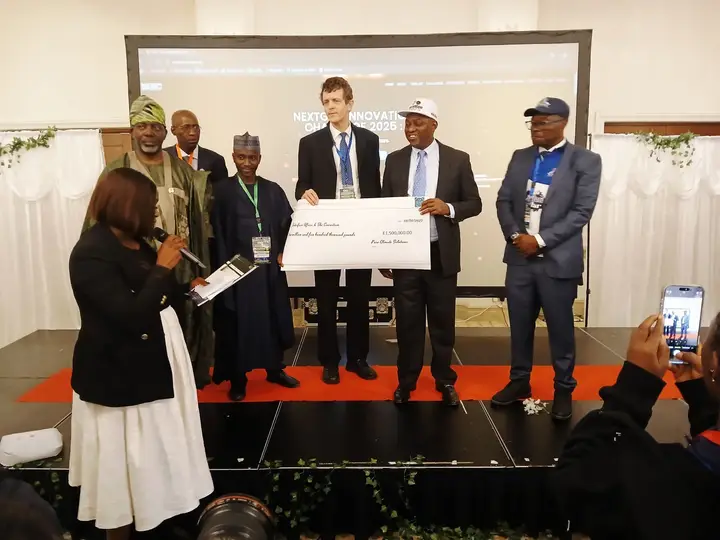
In London, a group of Nigerian innovators showcased how grassroots creativity can translate into global opportunities, but their journey highlights the hurdles African entrepreneurs face. Among them, 24-year-old Al-Amin Muhammad Idris stood out. His project, which recently won £1.5 million in the NextGen Innovation Challenge, aims to develop a low-cost water purification system for rural communities.
“I had the idea for years, but finding funding and mentorship was the hardest part,” Idris said. “Without support from NBTI, this project would still be on paper.”
The National Board for Technology Incubation (NBTI) has been positioning itself as a hub for turning ideas into viable businesses. Its programmes provide incubation space, mentorship, and access to investors, aiming to address what the board calls a “bankable project deficit” in Nigeria.
At a meeting hosted at Nigeria’s High Commission in London, NBTI officials discussed expanding this model across the Commonwealth, where many nations struggle to convert innovation into economic growth.
Critics, however, caution that awards and incubators alone cannot overcome systemic challenges such as infrastructure gaps, market access, and policy bottlenecks.
For innovators like Idris, the experience demonstrates both the potential and the fragility of Africa’s start-up ecosystem: talent is abundant, but support remains uneven.