For decades, wealthy Nigerian families have sent their children to prestigious British boarding schools abroad.
Now, those schools are coming to Nigeria.
Charterhouse, one of the UK’s most elite institutions, opened a primary school in Lagos last year. Its secondary school is set to begin in September.


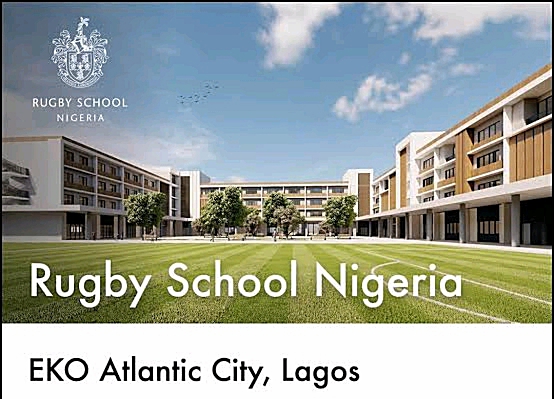
Rugby School is also launching in Nigeria this year. Other renowned British schools, such as Millfield, Wellington College, and Harrow, are also exploring similar opportunities.
So, what is behind this sudden expansion?
For many parents, it is about striking a balance between academic excellence and cultural grounding.
“I am excited about it,” says Karima Oyede, a British-Nigerian consultant whose son is currently enrolled at Rugby School in the UK but will transfer to the Lagos campus in September.
“The opportunity to experience the British system in his country of origin is the best of both worlds.”
Parents like Oyede are drawn to the prestige of British education, but they have been hesitant to relocate due to the schooling. With these campuses in Nigeria, returning home is finally feasible.
Nigerian parents value global education, but not at the expense of local values.
“African parents love the fact that they are giving their children international standing… but they do not want their children to lose their African-ness,” says Ijay Uwakwe-Okoronkwo, an educational consultant based in Abuja.
One primary cultural concern is the difference in attitudes between the UK and Nigeria regarding social issues, particularly LGBTQ rights.
Same-sex relationships remain illegal in Nigeria, and many families are uncomfortable with the more liberal approaches abroad.
“We are a British independent school, but sitting firmly within Nigerian cultural needs,” says John Todd, head of Charterhouse Nigeria.
While Charterhouse UK proudly displays a rainbow flag, its Nigerian counterpart does not. “We follow the law of the land,” he added.
Even religious traditions are respected. Students can return home from boarding school every Sunday to attend church.
Why Nigeria?
For British schools looking to expand, Nigeria is a logical next step.
“The Middle East and China are already saturated,” says UK government export adviser Mark Brooks. “Nigeria is the gateway to Africa.”
Moreover, Nigerian students have a reputation for academic excellence. “There is no school I work with that has not had a Nigerian serve as head boy,” Brooks says. “The word is out in the UK; we must take Nigeria seriously.”
With the cost of overseas education skyrocketing, especially after the UK added a 20% VAT on private school fees, many families are seeking alternatives closer to home. Charterhouse UK charges about £60,000 annually, while its Lagos campus costs roughly £15,000.
“It is the same curriculum, but at a fraction of the cost,” says Todd. “And with many British experts teaching here, parents still get that international quality.”
British universities may follow suit. Nigeria’s higher education sector is in a worse state than its secondary schools, plagued by frequent strikes and underfunding. Meanwhile, studying abroad is becoming increasingly challenging due to exchange rate fluctuations and stricter visa requirements.
In 2023, Nigeria was among the top 10 countries for UK student visas; however, this may change.
“Many parents are worried about sending their children out of the nest too early,” says Uwakwe-Okoronkwo. British universities opening campuses in Nigeria, she believes, could help students mature locally before pursuing further studies abroad.
For families like the Oyedes, this shift could not come at a better time.
“We have always wanted to come back,” Karima says. “Our children’s education does not have to be why we stay away.”