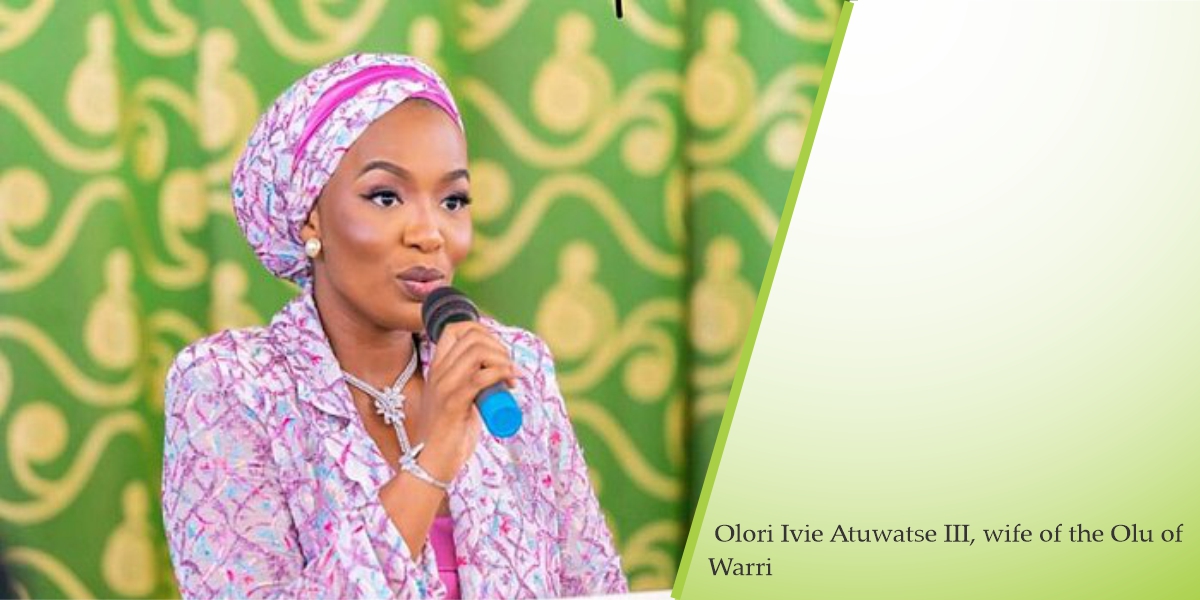
In many Nigerian schools today, learning feels like punishment. Children sit quietly in rows, copying from the board, memorising facts, and preparing for endless exams. There is little room for fun, discovery, or creativity. However, there is another way—a better way. That is the message from Olori Ivie Atuwatse III, wife of the Olu of Warri, who is urging Nigeria to learn from Finland’s education system.
Speaking at a fundraising event for the Centre for Teaching and Learning (CTL) Academy in Abuja, Olori Atuwatse stated that Nigeria’s rigid teaching method was hindering children’s ability to learn. “I visited Finland two years ago, and I saw how they teach with play,” she said. “Their children enjoy learning, and that helps them remember better. Our style is too boxed and limiting.” Finland is renowned for having one of the world’s best education systems. Its schools focus on play-based learning, where children explore, interact, and learn through fun activities rather than strict lectures. Experts say Nigeria can benefit from this model.
Dr. Amina Yahaya, an educational psychologist at the University of Abuja, agrees. “Children learn better when they are relaxed and having fun. If we keep forcing them to memorise without understanding, we are building stress, not knowledge,” she said. Olori Atuwatse also spoke about the role of learning environments. She shared how she helped build a modern STEM lab in the middle of a slum in Warri. “We brought in the best laptops and gadgets. However, more importantly, we created a place where children felt safe and valued,” she said. “That emotional comfort made all the difference.”
Mrs. Kemi Adeosun, founder of a private school in Lagos, says she has seen the benefits of play-based learning first-hand. “We started using activity-based lessons two years ago. Our pupils became more interested in school, and their test scores went up,” she noted. Still, the challenge is not just about the curriculum. It is about how that curriculum is delivered. Mr. Tunde Owolabi, an education policy analyst, believes teachers need better training. “You cannot give what you do not have. Most of our teachers were trained in the old system. We need to retrain them to make learning more child-centred.”
According to Olori Atuwatse, education reform in Nigeria must be a shared effort. “It is not just government. Parents, teachers, school owners—we all have a role to play,” she said. “Our children spend over 80% of their time in school. That space must be welcoming and built for learning.”
As Nigeria battles low literacy rates and poor school attendance, experts say the time for change is now. The Finnish model may not be a perfect fit, but its key lessons—fun, freedom, and focus on the child—can help Nigeria build a better education system. “We must stop teaching for exams and start teaching for life,” Dr. Yahaya concluded. “That is the only way to raise children who think, create, and thrive,” he said.