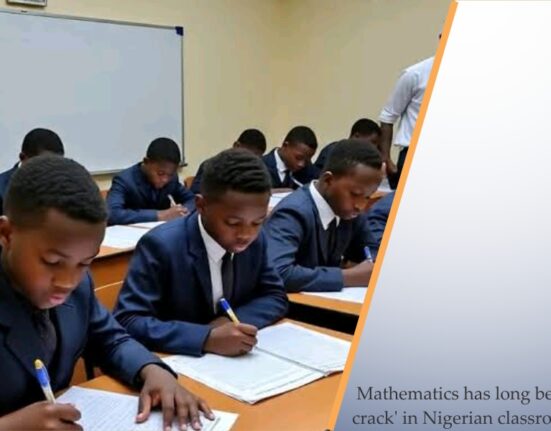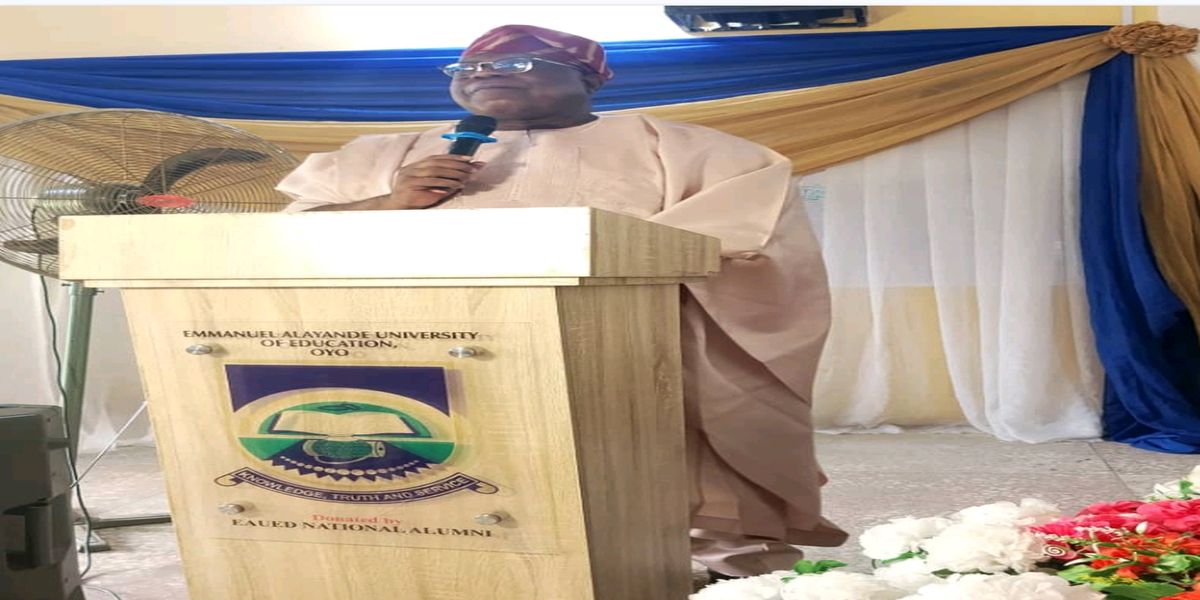
At the Emmanuel Alayande University of Education in Oyo, Professor Tunji Olaopa delivered a lecture that raised two important questions. The first question was: “What happens if Nigeria puts artificial intelligence (AI) at the centre of its education reforms?” Moreover, how can such reforms be sustained in the long run? His answers were meticulous, showing both the opportunities and challenges that Nigeria faces in reshaping its education system for the future.
Professor Olaopa explained that Nigeria’s education system was confronted with deep-rooted problems going back to colonial times and decades of military rule. The National Policy on Education (NPE), which guides the sector, has not been able to solve these problems. For example, it still promotes what Brazilian scholar Paulo Freire called the “banking method” of education, where teachers simply pour facts into students’ minds without encouraging critical thinking. This approach, he argued, cannot prepare young people for national development.
In his view, the National Policy on Education is problematic because it separates sciences from humanities in ways that weaken subjects like history, philosophy, and creativity, adding that these are areas that help students think deeply and live peacefully with others. The gap between theory and practice, along with federal control of education, has made progress even harder. Also, poor funding, old facilities, and lack of reliable data continue to weaken the system, he said.
Olaopa further noted that Nigerian schools do not give enough attention to entrepreneurship, skills training, or innovation, which are all important for preparing students for the challenges of today’s changing world.
Instead, they produce graduates who primarily compete for scarce white-collar jobs rather than creating wealth. He believes that education should be linked to national values of self-reliance and economic productivity.
This is where artificial intelligence and the fourth industrial revolution come in. Around the world, AI is transforming how knowledge is produced and used. From cloud computing and big data to digital tools and automated machines, AI is changing industries and creating new opportunities. Olaopa said Nigeria cannot afford to be left behind. The education system needs to embrace AI-driven reforms that motivate students to embrace the digital skills needed for the modern economy.
However, he warned that this transformation faces significant obstacles. AI requires strong infrastructure, reliable electricity, and widespread digital literacy; Nigeria still struggles with all these. If not carefully managed, the introduction of AI could create more problems than solutions and widen the gap between rich and poor, as well as between northern and southern Nigeria.
Despite the problems, Olaopa praised the Tinubu government for setting aside 7.3 per cent of the national budget, over N3.5 trillion for education, the highest ever in Nigeria. He also welcomed plans to strengthen technical and vocational training, widen access to student loans, and encourage research partnerships with private businesses.
Looking forward, he said, universities should have more freedom to build on their strengths. He suggested ending the Higher National Diploma (HND) and replacing it with a Bachelor of Technology, which would better fit with modern technical and digital learning. He also urged teacher training schools to adopt higher professional standards, including longer internships like those used in medical education.
In closing, Olaopa argued that only bold and steady reforms, driven by AI, strong partnerships, and practical leadership, can create an education system in Nigeria that is strong enough to support national growth and development in today’s digital age.