The Nigerian Army’s partnership with the Air Force Institute of Technology (AFIT) is gaining new momentum as the Institute continues to train Army personnel in aviation fuel handling—a critical logistics component for the Army’s recently activated Air Wing.
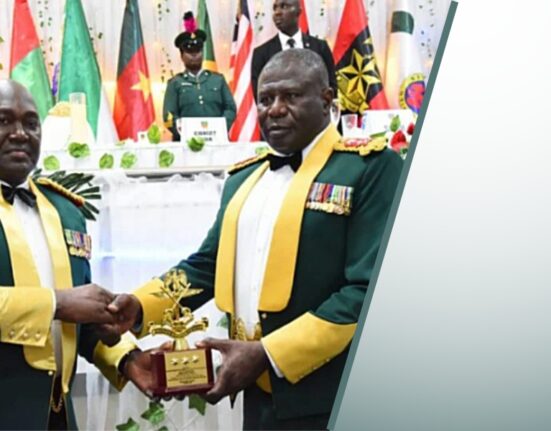
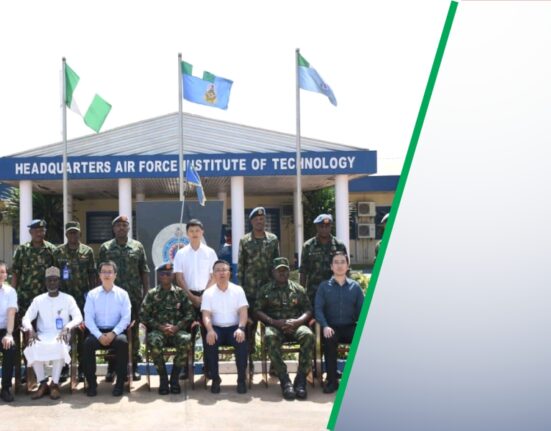
Commander of the Nigerian Army Corps of Supply and Transport (CCST), Major General AA Adeyinka, during a recent visit to AFIT, commended the Institute for the quality and depth of training delivered under its Logistics Management Department. The technical course, which began in April, equips participants with the skills needed for real-time engagement in aviation fuel supply, bowser management, fuel dispensing, quality control, and calibration — all vital for pre-flight and in-field operations. With the Nigerian Army transitioning into full air mobility support, the CCST was tasked with providing bulk aviation fuel to sustain the new wing. Personnel were nominated for the maiden course to ensure the Army builds internal capabilities aligned with operational needs.
Speaking on behalf of the Chief of Army Staff, Lieutenant General OO Oluyede, Major General Adeyinka expressed gratitude to the Chief of the Air Staff, Air Marshal HB Abubakar, for waiving tuition costs for the Army trainees—a gesture he described as a reflection of inter-service solidarity. He noted that the feedback from participating officers and soldiers has been “extremely encouraging,” and pledged continued collaboration between both services to ensure knowledge transfer and sustained training support.
In his remarks, AFIT Commandant, Air Vice Marshal Sani Labaran Rabe, reiterated the Institute’s commitment to bolstering the Army’s operational readiness. He stated that the aviation fuel course represents a significant step toward enhancing logistical support and air-ground mission coordination within the military. AFIT, Nigeria’s only tripartite defence university, remains central to the development of technical manpower across the Army, Navy, and Air Force, as well as among civilian aerospace professionals. The partnership reflects an evolving defence structure where collaboration, cost-efficiency, and capacity building are driving a more agile and self-reliant military.