Adebayo Adelabu, Minister of Power
Nigeria’s troubled higher education sector may finally breathe easier after the Federal Executive Council (FEC) approved ₦68.7 billion for electricity projects across universities and teaching hospitals. The announcement, made by Minister of Power Adebayo Adelabu, comes at a time when many public institutions are buckling under crippling electricity tariffs and repeated blackouts that have slowed academic work nationwide.
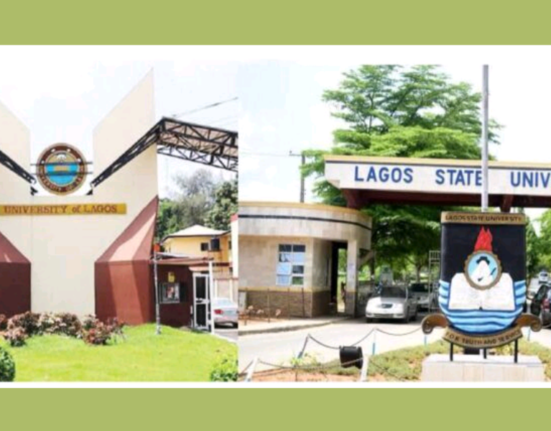
The new investment—channelled through the Energising Education Programme and managed by the Rural Electrification Agency—will provide reliable, cost-saving power solutions to eight major institutions, including UNILAG, OAU, UI, UNN, UNICAL, ABU Zaria, UCH Ibadan, and Federal University Wukari. The projects are expected to be completed in nine months, a timeline many experts say is ambitious but achievable.
For universities battling rising tariffs, the announcement feels like water in a desert. In recent months, institutions have been overwhelmed by electricity bills that rose by over 300 per cent following the Band A tariff adjustments. UNIBEN saw its monthly bill jump from ₦80 million to ₦280 million. UNILORIN now struggles with ₦230 million monthly charges. ABU Zaria revealed that it spends ₦300 million every month and has been disconnected for unpaid debts. Even teaching hospitals are not spared—UCH Ibadan has faced multiple disconnections due to a ₦495 million backlog.
Students and staff say the impact has been devastating. Laboratories sit idle, libraries shut early, and hostels remain stiflingly hot. “Research has become a nightmare,” a postgraduate student at UI lamented. Another student in UNILAG said the lack of electricity is affecting both academics and health: “We sweat all night; mosquitoes finish us.”
Vice-chancellors warn that 52 out of 62 federal universities may go bankrupt if tariff pressures continue. Education advocates argue that Nigeria cannot aspire to global competitiveness while its universities struggle to provide basic equipment. “How do we compete globally when we cannot even run our labs?” asked Nike Oladele, an education analyst.
Now, experts are calling for a mix of solutions involving energy audits, solar microgrids, targeted government subsidies, and aggressive energy-efficiency reforms.
While the recent decision taken by the federal government is a step in the right direction, some experts say the real test will be implementation. Until stable power becomes a reality, Nigeria’s ivory towers remain trapped in a cycle of darkness, debt, and declining academic standards.