For decades, Nigeria’s polytechnic system has carried a burden — the tag of being a “second-class” option for those who could not make it to the university. However, at a time when the nation desperately needs skilled hands to drive its economy, experts say this bias is becoming a costly national mistake.
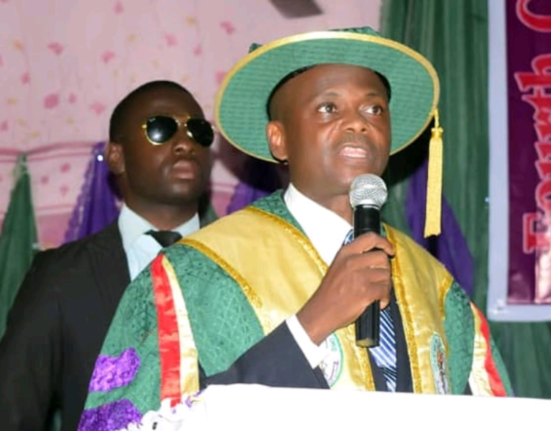
At the recently held 2024/2025 matriculation ceremony of the British Transatlantic Polytechnic, Akure, its Chairman, Dr Joe Obe, made a bold call: it is time to erase the discrimination and give polytechnics the power to award degrees. His argument is simple — if Nigeria wants to build a technology-driven economy, it must first change how it values technical education.
“Most of our university graduates are theory-based and struggle with practical application,” Obe lamented. “Meanwhile, our polytechnic graduates, who should be driving innovation, are often sidelined because society views their certificates as inferior.”
The numbers tell the story. From engineering workshops to IT start-ups, the country faces a massive shortfall of skilled professionals — worsened by the brain drain, popularly known as ‘japa’. According to Obe, “Nigeria is losing its limited skilled labourers in engineering, technology, and IT. This portends great danger for economic growth.”
Education analysts agree that the bias has deepened inequality in opportunity. “The irony,” says education consultant Dr Kemi Fadare, “is that employers keep complaining about unemployable graduates, yet the very institutions designed to produce job-ready technicians are treated as second tier.”
Stakeholders believe that granting polytechnics degree-awarding powers could attract more students, boost innovation, and restore balance to Nigeria’s education system. “We cannot continue to elevate theory over skill,” said Prof. Ibrahim Danladi, a higher education expert. “Every economy that industrialised — from Germany to South Korea — did so by valuing technical education.”
At the British Transatlantic Polytechnic, students are being trained using a blend of British and Nigerian curricula, giving them international exposure and employability skills. “We are breaking boundaries,” Obe assured. “Our graduates will not only compete locally but globally.”
Perhaps, if Nigeria truly wants to fix its economy, the change must start with the mindset — by valuing polytechnic graduates as much as university graduates.