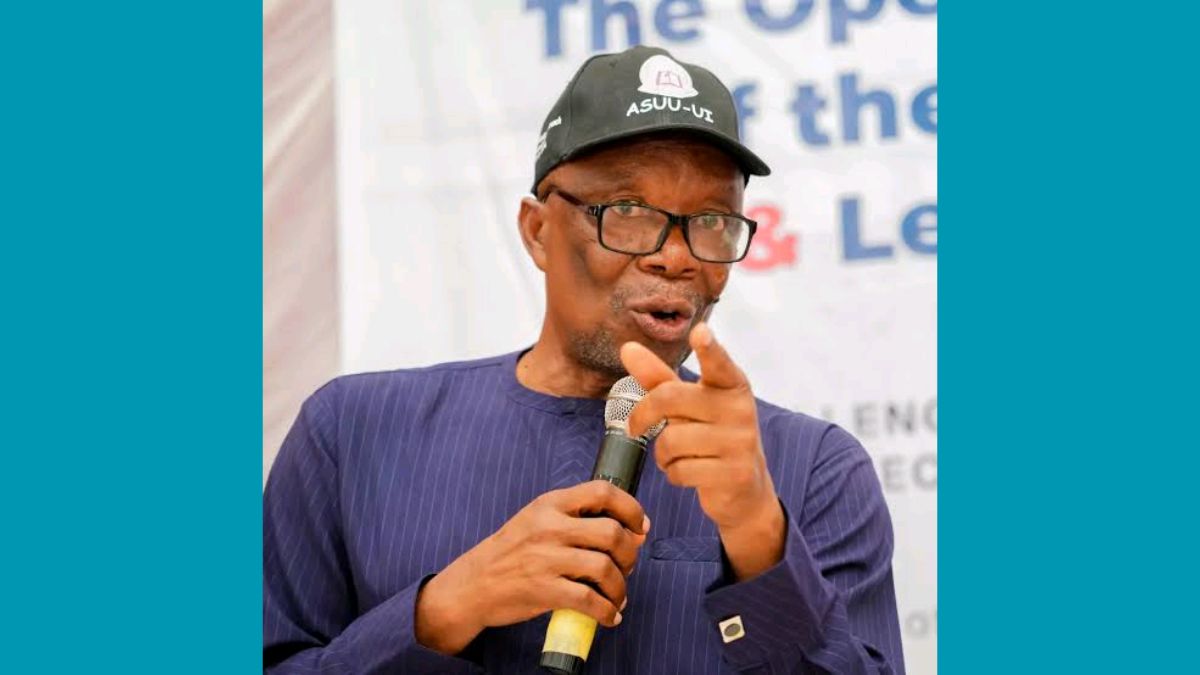
ASUU President, Prof. Emmanuel Osodeke
In many countries around the world, the educational sector is viewed as the foundation of national development; however, this is not the case in Nigeria, where the educational sector is hindered by crippling regulatory control from the government. The country’s universities — once seen as centres of knowledge, innovation, and leadership — have become victims of bureaucracy, politics, and inconsistent policies.
Experts have insisted that for universities to thrive, they must have the freedom to make decisions on teaching, research, and administration. Nevertheless, in Nigeria, this freedom — known as university autonomy — has been reduced to a mere slogan. The University Autonomy Bill, passed in 2004, promised institutions the right to manage their own affairs, from admissions to curriculum design. Sadly, that dream has remained mainly on paper.
Government agencies, such as the National Universities Commission (NUC) and the Joint Admissions and Matriculation Board (JAMB), continue to dictate what universities can teach, how they can admit students, and even how they can spend their funds. This excessive control has turned universities into extensions of government ministries rather than independent learning institutions.
Education historian Prof. J.F. Ade-Ajayi once noted that autonomy began to die when university councils lost their powers and lecturers became civil servants. Today, the results are precise — overcrowded campuses, demoralised lecturers, and poor academic performance. Many institutions are forced to admit students based on “catchment areas” and political considerations rather than merit.
However, the conversation is not one-sided. President Bola Ahmed Tinubu recently promised to grant full autonomy to Nigerian universities, stating that it would help raise educational quality to global standards. “University autonomy transfers the responsibility of performance directly to the institutions,” the President said through a representative at the University of Benin’s convocation. He assured Nigerians that his administration is committed to improving higher education and making it globally competitive.
Nevertheless, the Academic Staff Union of Universities (ASUU) has a different view. The union, through its President, Prof. Emmanuel Osodeke, insists that the government cannot completely withdraw from funding universities in the name of autonomy. He emphasised that the government must take note of Section 18 of the Nigerian Constitution, which guarantees free education at all levels, and that universities cannot generate enough income to survive on their own.
Osodeke believes that absolute autonomy should mean freedom from bureaucratic interference, not abandonment by the government. He called on the federal government to borrow a leaf from other developed countries by investing more in education, as this will ensure universities can function effectively.
Ultimately, the debate over autonomy is not just about control — it is about the future of Nigeria’s intellectual capital. If universities continue to operate as government departments, innovation and excellence will continue to fade. For Nigeria to rise again educationally, its universities must be free, but responsibly so. When the ivory towers lose their freedom, the nation loses its future.