Nigeria’s education crisis remains a significant issue, with a report from UNICEF in 2024 revealing that 70% of children cannot read simple sentences or solve fundamental math problems. In northern Nigeria, the problem is even more severe, as poverty, insecurity, and underfunded schools hinder educational progress.
In Sokoto and Zamfara, however, a revolutionary change is underway. The Teaching at the Right Level (TaRL) initiative is making strides in bridging the education gap.
This programme, a collaboration between UNICEF, TaRL Africa, and the State Universal Basic Education Boards (SUBEB), introduces a competency-based learning approach that focuses on the individual learning needs of each child instead of strictly adhering to age-based or class-based levels.TaRL’s method ensures that students are grouped according to their learning abilities, with tailored instruction in literacy and numeracy.
“We teach children based on their learning level, not their age or class. For literacy, we start in Hausa before moving to English. For numeracy, we begin with basic digits and gradually progress to more complex tasks like subtraction and multiplication,” explained Rachel Barka Madziga, an education specialist at UNICEF.
The programme’s success is evident. In Adamawa State, pupils’ numeracy skills have improved significantly, with many moving from basic to advanced arithmetic levels.
Sokoto and Zamfara have enrolled over 900,000 out-of-school children in the TaRL program.
Much of this progress is due to the intensive teacher training now reaching its final phase.
Local government areas (LGAs) across the region have appointed master trainers and mentors to guide the implementation of TaRL in schools.
Teachers in the region have welcomed the change. Yusuf Sharu, a teacher at Wambai Primary School in Yabo LGA, describes the TaRL approach as culturally inclusive and effective.
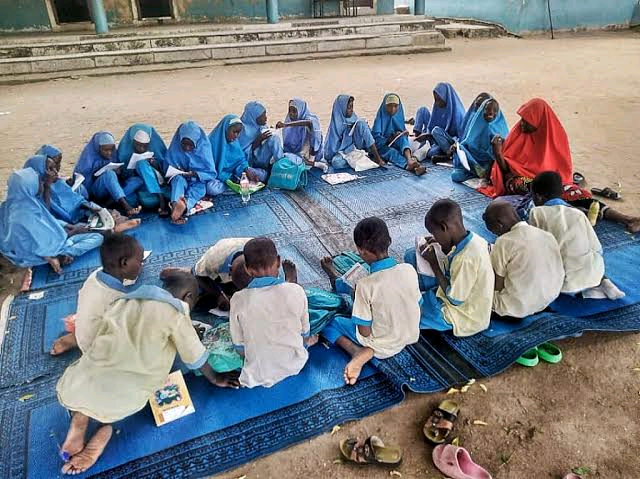
“The use of mats in classrooms connects children to their cultural norms. It helps them engage better, and they can touch and feel the concepts being taught,” he said.
This shift to active learning has made a noticeable difference.
“Children are no longer passive. They now actively participate, making the teaching process more enjoyable and impactful.”
For Sakina Abubakar, a 25-year-old English teacher from Isa LGA, TaRL has broadened her teaching skills.
“The new methods I have learned through the TaRL mentor training have transformed how I teach. The pupils now have better-sitting arrangements and more engaging activities,” she added.
Michael Juma, UNICEF’s Chief Field Officer in Sokoto, sees TaRL as more than just an educational method.
“It is about rebuilding the confidence of children who previously felt invisible in the classroom. We are seeing real transformation,” he said.
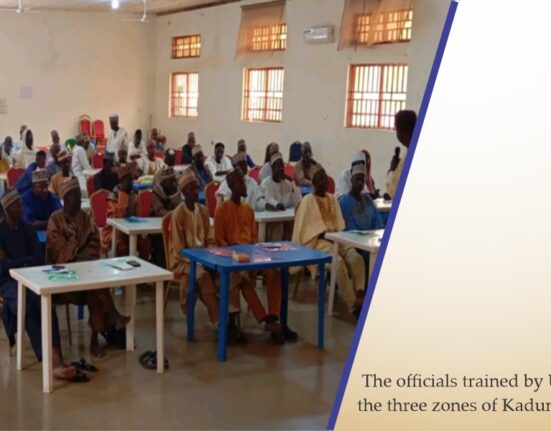
Training efforts continue in both Sokoto and Zamfara, with 60 non-formal facilitators and 630 formal school teachers already trained.
As the program expands, 1,568 classroom teachers will receive training on TaRL methods across 10 LGAs.
These efforts will ensure that the program’s impact is long-lasting.
Juma emphasised the importance of continued investment in education, community involvement, and strong political backing.
“When we get education right at the foundational level, we secure our children’s future and, by extension, our country,” he concluded.
As TaRL’s training phase draws to a close, schools across northern Nigeria prepare for full implementation.
With a more inclusive, practical, and effective learning approach, the future looks brighter for the region’s children.