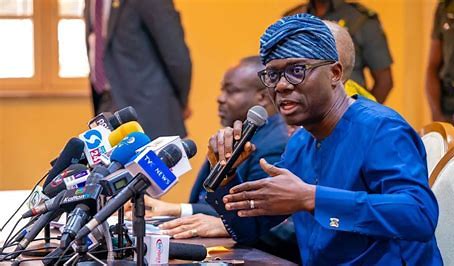
When Lagos State Governor, Babajide Sanwo-Olu, took the stage at the second edition of the Lagos Leadership Summit, his words struck a chord with many in the room: “We must invest in quality education if we want to create legacies and systems that will last beyond our time.” These weren’t just words aimed at leaders and policymakers in the audience. They were a call to action—a reminder that the future of Lagos, and by extension, Nigeria, hinges on the education system.
The Governor’s message was clear—education should no longer be seen as a fleeting concern but as the bedrock of any successful governance. “To build a system that works,” Sanwo-Olu emphasized, “leaders must invest early in quality education, define the purpose behind their work, and commit fully.” For Lagos, this means going beyond the immediate concerns of day-to-day educational management and setting a vision that prioritizes sustainable development in schools.
The state’s educational infrastructure, while vast, is often under pressure. Public schools in Lagos face many challenges—overcrowded classrooms, inadequate learning materials, and in some cases, an alarming shortage of qualified teachers. These issues are compounded by the growing population and urbanization, which means that the demand for quality education continues to outpace supply.
It’s against this backdrop that Governor Sanwo-Olu’s call for more investment in education takes on new urgency. He insists that without strategic investment in education, the state cannot create the kind of resilient, vision-driven leadership it needs to compete globally in the future. “Education is the foundation of long-term governance,” he added, pointing out that a commitment to education goes beyond government policies; it’s a matter of legacy.
The message resonated with other prominent speakers at the summit, including former Lagos State Governor Babatunde Fashola. Fashola, now a champion of inclusivity in governance, stressed that leadership must be rooted in values and principles that cut across culture, religion, and gender. The summit’s theme—“Transformative Leadership: Developing Responsive, Adaptive, and Inclusive Models”—mirrored the urgency of reshaping not only Lagos but Nigeria’s leadership culture as a whole.
Dr. Obafemi Hamzat, Lagos’ Deputy Governor, echoed the sentiment that a new generation of leaders is needed, ones who can solve problems, nurture growth, and rebuild the nation from within. But that requires an education system that equips young people with the skills and values to lead with integrity.
The emphasis on education at the summit wasn’t just a fleeting discussion—it was a reminder that the state’s future leaders, workforce, and visionaries will emerge from classrooms that need urgent attention today. Sanwo-Olu’s call to action was not about immediate solutions but about laying the groundwork for a thriving, prosperous Lagos tomorrow.
Lagos State’s Push for Long-Term Investment in Education: Beyond Immediate Solutions