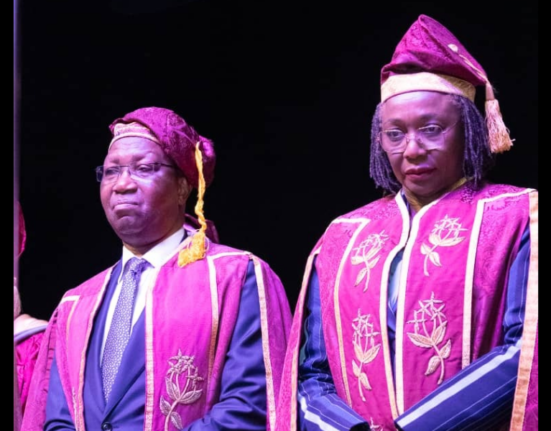
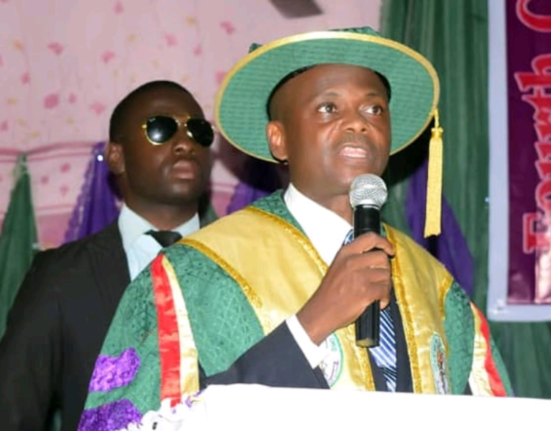
At FUTA, four students received scholarships from the Graceland Foundation for Human Development to support their studies
For many young Nigerians, getting a university degree has become a battle against the rising cost of education. With tuition fees and living expenses climbing every year, countless students from poor backgrounds are struggling to stay in school. However, some private initiatives are beginning to change that story.
At the Federal University of Technology, Akure (FUTA), four students recently received scholarships from the Graceland Foundation for Human Development to support their studies for the 2024/2025 academic session. The foundation’s Executive Director, Professor Oluwole Akinnagbe, said the award targets students who are brilliant and well-behaved but lack the financial means to continue their education.
The beneficiaries — all from the agriculture and information technology departments — represent a growing number of students who rely on private support to continue their education. FUTA Vice Chancellor, Professor Adenike Oladiji, commended the foundation’s gesture, noting that with education becoming more expensive, “scholarships and education loans are no longer privileges but necessities.”
Across the country, education experts are calling for stronger private sector involvement to prevent more students from dropping out. According to UNICEF, over 10.5 million children in Nigeria are out of school — the highest figure in Africa. Economic hardship, insecurity, poor infrastructure, and cultural barriers have continued to worsen the situation, especially in rural and conflict-prone areas.
At a recent education conference in Abuja, Fela Bank-Olemo, Senior Special Assistant to the President on Education Interventions, stated that the government alone cannot resolve the education crisis. He called for “a framework that will encourage companies and NGOs to invest in scholarships, education technology, and teacher training.”
He compared the needed reform to the telecoms revolution of 2001, when private companies helped Nigeria leap forward. “If properly incentivised, the private sector can do the same for education,” he said.
Groups like the Association for Formidable Educational Development (AFED) are already partnering with organisations like EIDU and the University of Buckingham to train teachers and expand access to affordable education for children from low-income homes.
As experts agree, education in Nigeria requires more than government funding — it needs a national partnership that makes learning accessible to all, regardless of background or financial means.