Aisha Garba, the Executive Secretary of the Universal Basic Education Commission (UBEC), says the Federal Government is leveraging digital technology to improve basic education and position public schools in Nigeria to compete on a global scale.
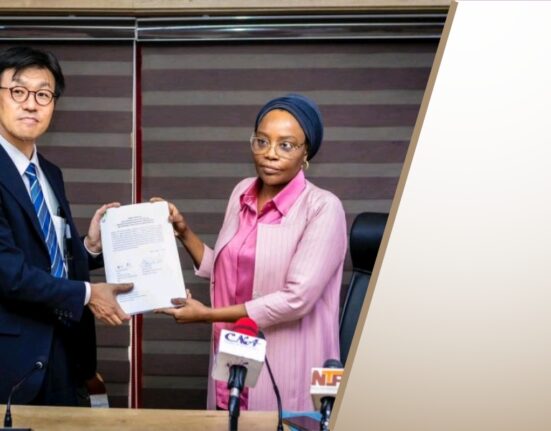
Speaking at the closing ceremony of the $10 million Korea International Cooperation Agency (KOICA)-Nigeria Smart Education Project, Garba said the collaboration with the Korean government had led to the establishment of 37 smart schools across the 36 states and the Federal Capital Territory. She said 21 of these schools are operational, benefiting more than 8,000 learners, while academic activities are expected to begin soon in the remaining 16. Garba said the project was launched in 2021 to address the challenges of over 10 million out-of-school children, poor foundational skills among 70 per cent of pupils, and a lack of digital literacy among more than 60 per cent of public primary school teachers.
She added that the partnership had produced Nigeria’s first Smart Education Master Plan, trained over 300 teachers and school leaders, set up six content development studios, and created nearly 4,000 digital learning resources in Mathematics and Science. Garba noted that since assuming office, she has removed long-standing bureaucratic obstacles preventing states from accessing matching grants, leading to the distribution of over 420,000 library materials, 158,000 history books, 740 smart boards, and ICT equipment for special-needs and girls’ schools.