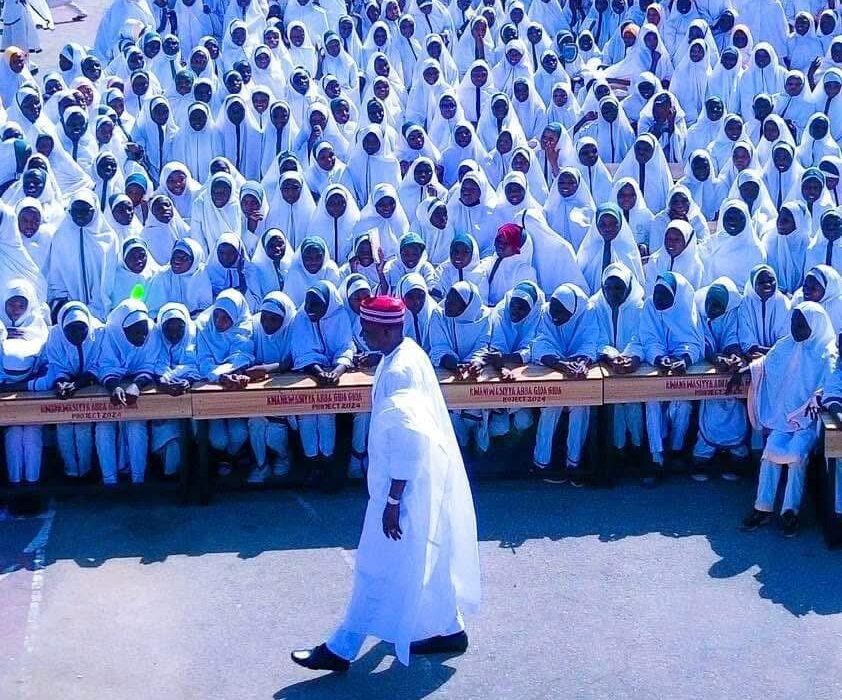
In a rare show of political will and commitment to education, Governor Abba Kabir Yusuf of Kano State has taken a bold step that has caught the attention of many across Nigeria. He recently approved over N3 billion to sponsor no fewer than 141,175 students for the 2025 NECO, NABTEB, and NBAIS examinations — a move many call a game-changer.
The State Commissioner for Education, Alhaji Ali Haruna Makoda, announced during a press briefing in Kano. According to him, the beneficiaries are students from public secondary schools who passed their 2024 qualifying examinations with a minimum of five credits.
While state sponsorship of examinations is not a new phenomenon, the scale of this gesture makes it stand out. In 2023, about 125,000 students were sponsored. However, this year’s number shows a significant increase, pointing to Governor Yusuf’s determination to leave a lasting impact on the education sector.
“This is part of His Excellency’s promise to invest heavily in our children’s future,” Makoda said. “Education is the foundation of any society, and we’re putting our money where our mouth is.”
Kano State had earlier declared a state of emergency in the education sector. The government followed this up by dedicating 31.5% of its 2024 budget, the highest in the country, to education. Experts say this is a welcome move in a region where poverty, insecurity, and inadequate infrastructure have long hindered learning.
For many families in Kano, this development comes as a huge relief. With the rising cost of living, paying for the national examination is a burden many parents cannot bear. However, with this new initiative, children from low-income homes can take their final examinations and proceed to the next stage of their academic journey.
The Commissioner has also instructed school principals to ensure eligible students are not left out or sidelined. “There must be no room for discrimination or obstruction. All students who qualify must benefit,” he said. Indeed, Governor Yusuf’s investment is not just in examinations, but in the future of Kano. Whether this bold gamble will pay off in the long run remains to be seen, but for now, thousands of students have a reason to hope again.