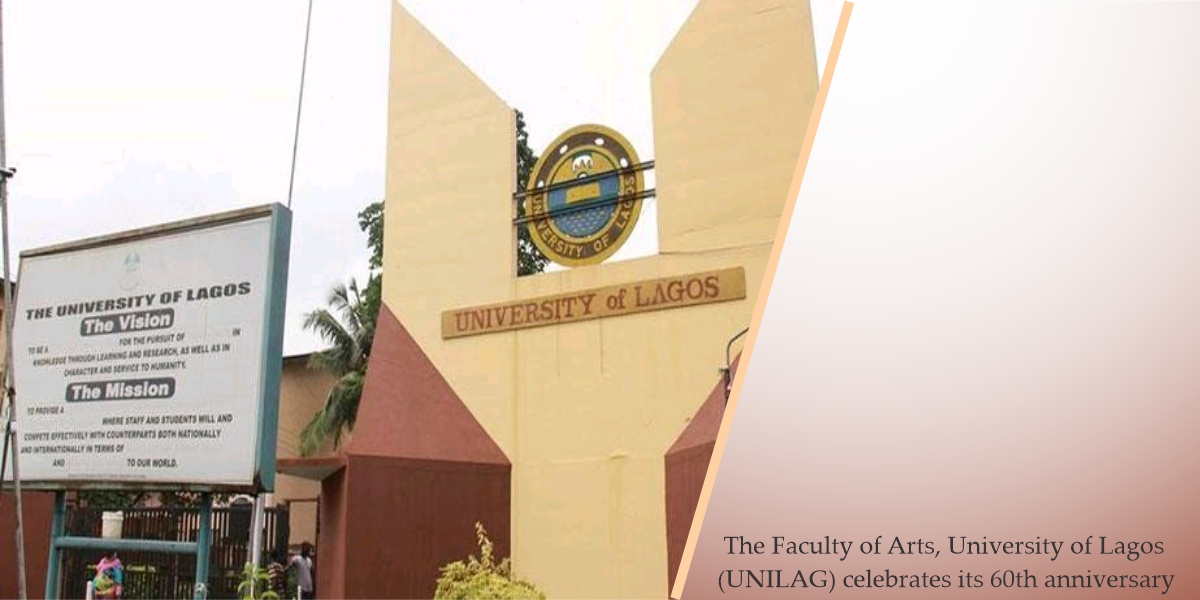
As the University of Lagos (UNILAG) celebrates its 60th anniversary, one of its oldest and most respected arms of the institution—the Faculty of Arts—is seizing the opportunity to reflect on six decades of intellectual influence, social contribution, and cultural leadership.
The Faculty, which has produced some of Nigeria’s finest journalists, diplomats, authors, and academics, is marking the milestone with a public lecture titled “From Knowledge to Justice: Reclaiming the Humanities in Africa’s Tech-driven Future.” The lecture, to be delivered by Dr Labode Obanor, President of the League for Social Justice (LSJ), will be held on Thursday, October 23, at the Faculty of Arts Conference Room, UNILAG, Akoka.
For many observers, the Faculty’s 60th anniversary is more than a celebration — it is a reminder of how the humanities have shaped national consciousness and guided Nigeria through complex social and political transitions.
Speaking ahead of the event, Dr Obanor noted that education must evolve beyond data and degrees. “Education is not merely about information; it is about transformation,” he said. “The humanities remind us that progress without justice is regression. As technology transforms Africa, we must not lose our moral compass.”
Chairman of the Organising and Media Committee, Francis Shonubi, described the Faculty’s legacy as one rooted in nurturing thinkers who drive conversations that shape society. “Our graduates are in the media, government, international agencies, and classrooms across the world. What unites them is a shared passion for truth, justice, and humanity,” he said.
Dr. (Mrs.) Abiola Adeyemi, a UNILAG alumna and communication scholar, added that the Faculty has been instrumental in preserving Nigeria’s cultural identity. “When you study the humanities, you learn empathy, ethics, and perspective — qualities our society urgently needs,” she remarked.
Education analyst and UNILAG historian, Prof. Tunde Adebajo, also reflected on the Faculty’s impact: “The Faculty of Arts was a voice during Nigeria’s post-independence era and remains a moral guide in today’s digital age. Its scholarship has consistently questioned power and defended democracy.”
As the Faculty looks ahead, the celebration offers a vision for the next generation of African thinkers — young innovators who will use knowledge not only to succeed but to serve. For sixty years, UNILAG’s Faculty of Arts has proven that the strength of a nation lies in the power of its ideas — and in those who dare to think, speak, and act for the common good.