

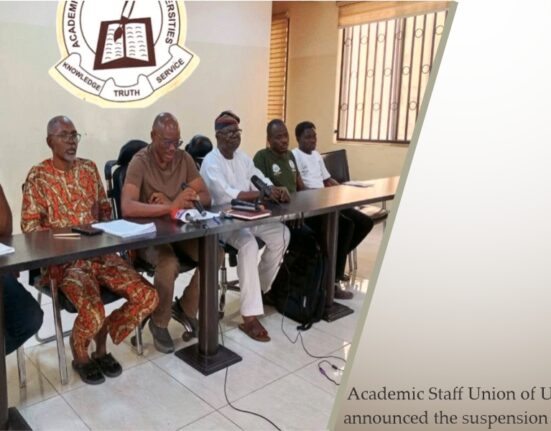
Each Academic Staff Union of Universities (ASUU) strike is more than a pause in lectures; it reflects Nigeria’s recurring governance failure. The latest two-week warning strike, which began on October 13, has once again paralysed campuses across the country, sending thousands of students home and halting academic progress.
At its core, this strike is a symptom of a deeper malaise—a government that views education not as an investment but as an obligation. Since 2009, successive administrations have signed agreements with ASUU only to abandon them once the picket signs disappear. The current impasse stems from the same grievances: poor funding, unpaid allowances, and decaying infrastructure. However, the government’s chosen response—the enforcement of a “No Work, No Pay” policy shows how the issue has been reduced to a salary dispute rather than a question of national vision.
This short-term approach ignores a growing crisis. While the government celebrates macroeconomic recovery in the latest World Bank report, the same report warns that gains have not translated into improved public services or human capital development. A university system locked in endless strikes undermines both. It erodes investor confidence and deepens the despair of families already burdened by food inflation and unemployment.
The tragedy is not that ASUU has gone on strike again, but that Nigerians no longer expect anything different. Unless university funding is ring-fenced by law, agreements are legally enforced, and institutions are granted absolute autonomy with accountability, the cycle will persist. Each strike costs more than lost classroom hours—it erodes trust, weakens national capacity, and mortgages the future. In the silence of Nigeria’s lecture halls lies a louder truth: a nation cannot claim progress while its universities remain closed.




Leave feedback about this