

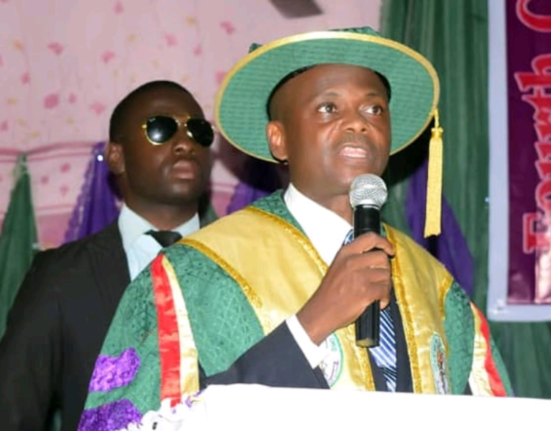
Dr Kola Oyediran – A demographer

Sunday Odeleke – A public commentator
Nigeria risks a deepening crisis unless its education system is urgently reformed, two Nigerian scholars have warned.
In a recent article, demographer Dr Kola Oyediran and public commentator Sunday Odeleke believe that Nigeria’s population growth has outpaced both education planning and job creation, leaving millions of young people without the skills needed to support economic growth. They contend that successive governments have mainly focused on political reform, monetary policy and infrastructure, while paying insufficient attention to population structure and education quality, a gap they describe as increasingly costly.
Nigeria has one of the youngest populations in the world, with a median age of about 18. While political leaders often frame this youthfulness as a potential advantage, the scholars stated that the benefits depend on whether schools and universities can prepare young Nigerians for work.
They opine that the education system is failing to meet these needs. “Classrooms in many parts of the country are overcrowded, access to quality education remains uneven, and curricula are heavily tilted towards academic certification rather than practical skills,” they noted. As a result, hundreds of thousands of graduates enter the labour market each year without the training needed for available jobs. This mismatch, they say, has fuelled rising youth unemployment and underemployment, while also contributing to the growing number of young Nigerians seeking opportunities abroad.
The scholars link the migration of professionals, including doctors, engineers, and other skilled workers, to a system they describe as struggling to retain talent. They assert that when education fails to translate into stable employment or decent living conditions, outward migration becomes more likely. They also note that pressure on schools mirrors challenges across other sectors, including housing, transport and electricity, where population growth has consistently outstripped planning and investment.
The scholars noted that education policy must be central to Nigeria’s response. Keeping children, particularly girls, in school for longer has implications not only for employment but also for family size, health outcomes and long-term economic stability.
They also call for a stronger focus on technical and vocational education. “We need fewer sociologists and more welders, coders, agronomists, and solar technicians,” they said, emphasising that Nigeria’s labour market requires practical skills rather than an oversupply of general degree holders.
Population trends, Dr Oyediran notes, are predictable decades in advance, making the pressure on education neither sudden nor unexpected. Failure to align education policy with demographic realities, he warns, risks deepening poverty and further straining public institutions.
The authors conclude that Nigeria still has a window to turn its youthful population into an asset, but only if education reform is treated as a core national priority, rather than a supporting policy.





Leave feedback about this