

Across the world, major cities are known not just for their populations or economies, but also for the ideas they produce. Cities like London, New York, Dubai, and Singapore have built strong reputations as centres where education policies, research, and global learning conversations are shaped. Africa needs such cities as well, and Lagos State is well-positioned to play this role.
Indeed, London is home to some of the world’s best universities and education think tanks that influence global education policies. New York combines top institutions, global organisations, and strong media to shape global learning conversations. Dubai has positioned itself as a meeting point for international education fairs, school networks, and innovation hubs.
Singapore, through careful planning, has become a global reference for education quality and teacher training. These cities show that education thought leadership thrives where institutions, policy, and platforms come together.
Lagos already has many of these building blocks. It is one of the largest cities in Africa, and Nigeria’s education nerve centre, with thousands of public and private schools, universities, research institutes, and training centres. The state boasts notable institutions, including the University of Lagos, Lagos State University, and several highly regarded private universities. As a result, it has attracted thousands of students and scholars from across the country and beyond. This concentration of learning institutions gives Lagos a natural advantage.
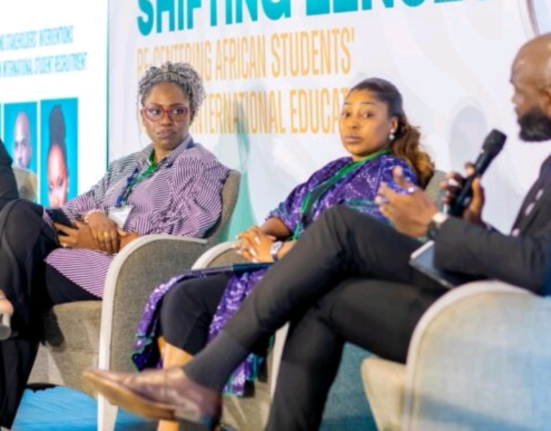
Another key strength is human capital. Lagos has a young, energetic, and ambitious population. Young people are active in technology, creative industries, research, and social innovation. This youthful energy, when properly guided, can drive fresh thinking on how Africa teaches, learns, and prepares its workforce for the future. In the last few years, Lagos has been a regular host for major education conferences, policy dialogues, and international summits. Also, events focused on digital learning, global education, skills development, and innovation are increasingly choosing Lagos as their venue. These gatherings help position the state as a meeting point for discussing African education challenges and solutions.
Government policy is another critical factor. The Lagos State Government’s investments in digital education, curriculum reform, teacher training, and technical education show a clear intention to modernise learning. Programmes such as EKO-EXCEL and the Eko Digital Initiative provide practical examples that other African cities can study and adapt.
However, to fully claim the space of educational thought leadership, Lagos must go further. There is a need for more education-focused think tanks, strong research output, reliable data, and long-form policy conversations that influence decisions beyond Nigeria. Collaboration between the government, universities, the private sector, and the media will be critical.
If Lagos deliberately invests in ideas, knowledge sharing, and education research, it can move from being just a large education market to becoming Africa’s leading voice in education thinking. On a continent seeking homegrown solutions, Lagos has both the scale and substance to lead.




Leave feedback about this