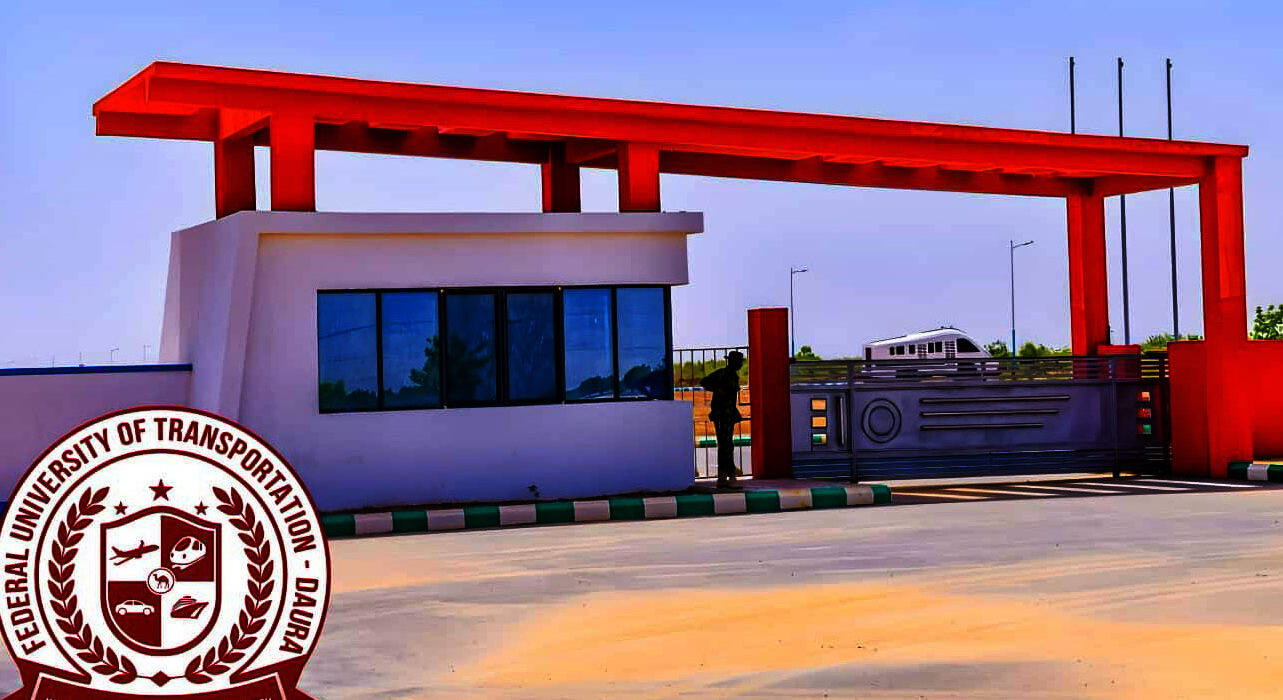
The Federal University of Transportation, Daura, Katsina State, has disclosed plans to send its students to China and Russia for practical training as part of their academic development.
The Vice-Chancellor of the institution, Professor Umar Adam-Katsayal, made this known in Daura on Wednesday while presenting his two-year scorecard to journalists.
He stated that the university is working closely with the Chinese construction company responsible for building the institution to actualise the proposed international training arrangement.
“In 2018 and 2019, the Federal Government, in collaboration with the company, selected and interviewed some students from Ahmadu Bello University, Zaria—particularly those in civil and mechanical engineering—who were subsequently sent to China for a two-year practical training,” Professor Adam-Katsayal explained.
“The programme adopted a ‘three plus two’ model, where students spent three years studying theoretical components in Nigeria and two years in China for hands-on practicals. Some of those students are now among our pioneer academic staff and are preparing our students to benefit from similar opportunities,” he added.
He noted that the university is working to replicate that model by enabling students to undertake three years of theoretical study locally before proceeding to China and Russia for two years of practical training.
The Vice-Chancellor also highlighted several achievements recorded by the institution within the past two years. These include strategic collaborations with key domestic and international institutions, particularly transport regulatory agencies.
He further revealed that the university has now been included among institutions eligible for funding support from the Tertiary Education Trust Fund (TETFund). This development is expected to significantly enhance its academic infrastructure and staff development programmes.
According to him, the university is pursuing the expansion of its physical infrastructure, including the construction of additional lecture halls, laboratories, workshops, and accommodation for both staff and students.
“We are incorporating modern teaching technologies, with plans to introduce smart classrooms and expand virtual learning platforms. Sustainability initiatives, such as solar-powered facilities and a green campus design, are also a priority,” he stated.
He added that the university would soon launch new academic programmes in areas such as transportation security, aviation technology, intelligent transport systems, and sustainable urban mobility.
Furthermore, short and executive courses are being developed to cater to the professional development needs of working-class individuals and executives.
Professor Adam-Katsayal also disclosed that the institution aims to intensify its research focus on emerging fields, such as autonomous vehicles and green logistics, while continuing efforts to strengthen staff capacity and foster industry partnerships.
He, however, acknowledged that the university is currently facing funding challenges and urgently requires supplementary resources to manage rising operational costs and maintain existing infrastructure.