
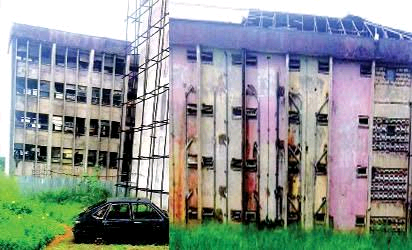
In the dead of night, Amina Musa lies awake on her iron bunk bed, drenched in sweat, with mosquitoes buzzing relentlessly around her ears. The fan in her University of Nigeria, Nsukka (UNN) hostel room has not been working for weeks. Power is a luxury. Water is a gamble. The bathroom? She avoids it after dusk. “As a female student, you just have to plan your whole life around fear,” she says quietly.
Across Nigeria, crumbling hostel blocks, epileptic electricity, and broken-down bathrooms are everyday realities for students in public universities. Nevertheless, these decays come with an added cost for female students — their safety, privacy, and dignity.
“In the hostels, we queue to bathe in bathrooms that stink. Some of us wake up as early as 4:30 am to shower before boys start trooping in to fetch water. There is no privacy,” said Grace Umeh, a 300-level student at Ignatius Ajuru University of Education, Rivers State.
For many female students, the risk of sexual harassment, infections from unhygienic facilities, and the emotional trauma of living in fear is a constant companion. Some even resort to open defecation at night or bathing behind hostel blocks because of failed plumbing.
A recent visit to the UNN hostels revealed broken walls, leaking pipes, and mouldy ceilings. Bathrooms were no better than public gutters. “I contracted a urinary tract infection last semester because of the toilet conditions,” said Ifunanya Obi, a final-year student. “I could not concentrate in class and missed a test.”
At LASU, Ojo, female students report that power outages have left them feeling unsafe. “There is no light in the corridors. I use my phone flashlight to find my way to the bathroom at night, but anything can happen,” said Omolara Adeyemi, a 200-level student.
Experts say poor infrastructure affects both genders but disproportionately endangers females. “Girls are more vulnerable in dark, unsafe environments. They are often the targets of harassment and assault. When there is no light or working toilets, it strips them of dignity,” explained Dr Mary Ekpe, a gender rights advocate and lecturer at the University of Calabar.
The National Universities Commission (NUC), in a 2013 survey, admitted that only one in 25 public universities could house even 70% of its students. In most others, only 2–43% had access to hostel accommodation. A decade later, not much has improved.
“The decay is systemic,” said infrastructure expert Engr. Kunle Ajiboye. “We cannot talk about female student safety without addressing the funding crisis in our education sector.”
So, what is the way forward?
Stakeholders suggest urgent intervention. Universities must prioritise rehabilitating female hostels, installing solar lighting, repairing toilets, and providing access to running water. Gender-sensitive design should guide future construction. “We need safe spaces for women on campus. It is not a favour. It is a right,” said Dr. Ekpe.
Students like Amina remain hopeful. “All we want is a place to feel safe, clean, and respected. Is that too much to ask?”
Leave feedback about this