
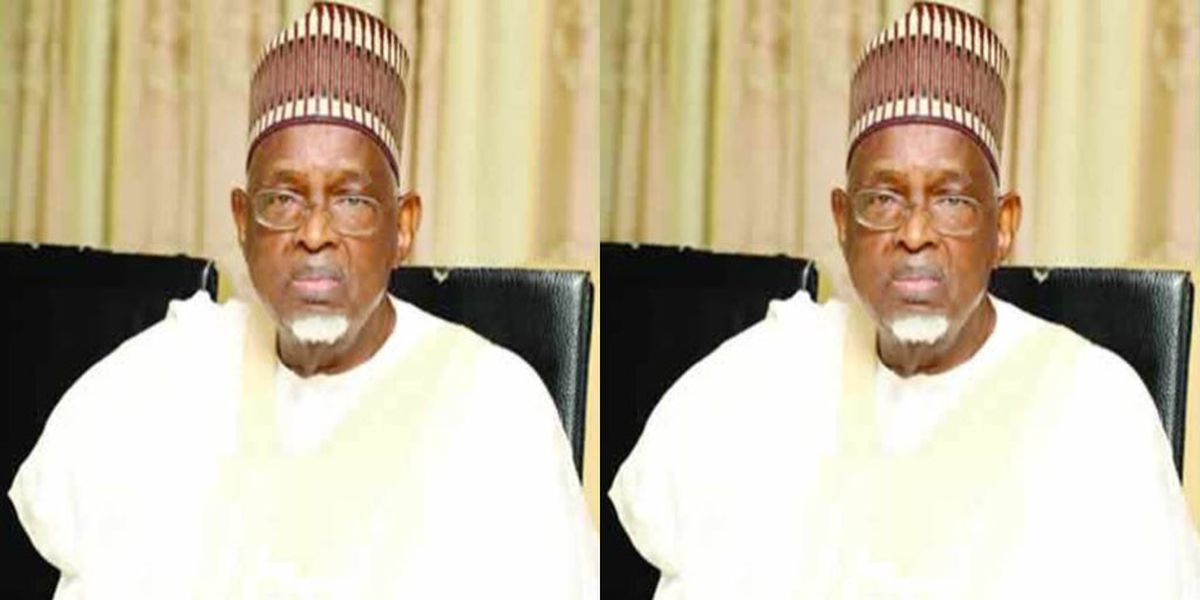
In a country where many public figures are remembered for what they said, Professor Jibril Muhammad Aminu is remembered not just for what he said but for what he built. From classrooms in undeserved communities to top-level educational policies that shaped Nigeria’s school system, his life was a shining example of how one person can use education as a tool, not just to rise, but to lift others. His legacy reminds us that education is not only a tool for personal advancement but also a powerful force for national development.
Born on August 25, 1939, in the quiet town of Song in Adamawa State, Jibril Aminu’s early life was not one of privilege but of struggle. He lost his father at a young age and was raised by his mother and uncle. Nevertheless, what he lacked in material wealth, he made up for in brilliance and determination. He attended Barewa College, where his sharp memory earned him the nickname “Roll Call,” and later graduated from the University of Ibadan as a medical doctor in 1965. He further obtained a PhD in Medicine from the Royal Postgraduate Medical School in London, showing an early commitment to not just learning, but mastering his field.
His academic journey alone was inspiring, but what makes Aminu truly remarkable is how he used his education not to chase personal comfort but to reform and rebuild Nigeria’s education system. In 1975, Professor Aminu was appointed Executive Secretary of the National Universities Commission (NUC), a role that placed him at the centre of Nigeria’s higher education system. At the time, universities were growing in number, but there were serious concerns about the quality of education. Aminu brought structure, discipline, and vision to the commission. He introduced university accreditation systems, developed minimum academic standards, and ensured that institutions were regulated correctly. These reforms were not just policies on paper; they helped restore confidence and credibility in Nigeria’s universities and ensured that graduates could compete globally. He also oversaw the establishment of seven new universities, expanding access to higher education and allowing students from different parts of the country to pursue academic dreams closer to home. This move was significant in Northern Nigeria, where educational opportunities were limited at the time.
One of Aminu’s most influential contributions was his support and implementation of the 6-3-3-4 system, a significant change in Nigeria’s education structure. Under this model, students would spend 6 years in primary school, 3 in junior secondary, 3 in senior secondary, and 4 in university or other tertiary institutions.
What made this system unique was its focus on vocational and technical education during the junior secondary stage. The idea was to help students discover their strengths early and prepare them for practical careers, even if they did not go on to the university. Although there were challenges in implementation, the vision behind it was powerful: to create a more flexible and inclusive education system that served all Nigerians. Between 1989 and 1992, Jibril Aminu served as Nigeria’s Federal Minister of Education. He did not just focus on policy; he looked at the real-life challenges facing learners, especially those in rural and nomadic communities. One of his key achievements during this time was the launch of the Nomadic Education Programme. This initiative aimed to bring mobile classrooms, flexible teaching methods, and culturally sensitive materials to Fulani herders and other nomadic groups who often missed out on education due to their way of life.
Aminu believed that no child should be left behind, no matter where they lived. His approach to education was both practical and compassionate, a rare combination in government policy. He also established the School for Gifted Children in Suleja, which gave exceptionally talented students from across Nigeria a place to learn and grow. He recognised that nurturing talent early could help produce future leaders, scientists, and thinkers. To support teacher training and quality, Aminu helped strengthen two major institutions, namely the National Commission for Colleges of Education (NCCE) and the National Commission for Nomadic Education (NCNE). These bodies are still central to teacher development in Nigeria today.
Even after leaving the Ministry of Education, Aminu’s commitment to learning continued. As Vice-Chancellor of the University of Maiduguri between 1980 and 1985, he promoted academic research, encouraged publication of journals, and pushed for international partnerships. He believed that Nigerian universities should not just teach, they should solve problems, drive innovation, and shape national development.
He later served as Nigeria’s Ambassador to the United States between 1999 and 2003 and Senator for Adamawa Central between 2003 and 2011. Even in those political roles, he often spoke out about educational issues, always urging the government to invest more in schools, teachers, and youth development.
Professor Jibril Aminu passed away on June 5, 2025, at a fruitful age of 85. The news of his death was met with tributes from across Nigeria: presidents, governors, academics, and ordinary citizens who felt the impact of his work. What made his legacy so powerful was its lasting nature. The systems he helped build are still in place. The students he empowered are now professionals. The teachers he supported are still shaping minds. In an age where many public servants chase titles, Aminu chased results. His story proves that true leadership is not about being seen, but about making a difference, quietly, steadily, and permanently.
Jibril Aminu understood something that many people forget: education is not just about books or certificates, it is about opportunity, equity, and empowerment. From nomadic schools to gifted programmes, from university reforms to national education policy, he used every position he held to open the door of learning wider for the next person. His life is a reminder to every educator, policymaker, and student that when investment is made in education, it is an investment in the future. Equally, when we invest in education with vision and commitment, as Jibril Aminu did, the future becomes not just brighter, but better for everyone.
Leave feedback about this