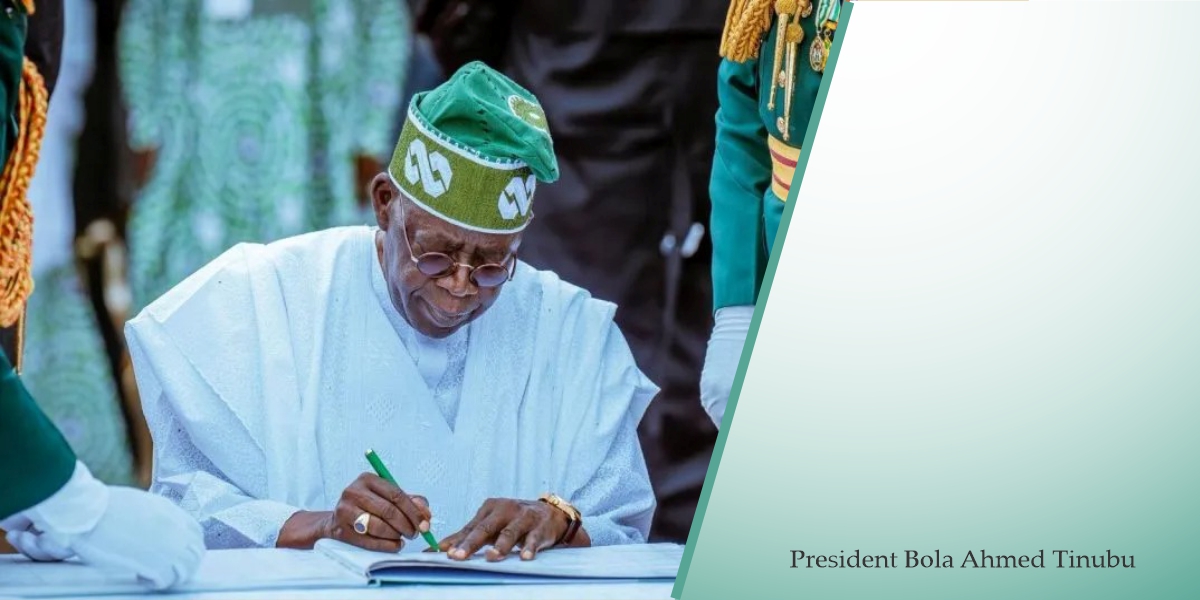
It has been two years since President Bola Ahmed Tinubu assumed office as Nigeria’s leader. For many young Nigerians, this is a good time to ask a crucial question: How has the government supported education?
Education is critical to young people. It helps us build a better future. That is why we care so much about what the government is doing to improve schools, universities, and technical training.
One of the most significant actions this government has taken is to initiate the National Education Loan Fund (NELFUND). For many students, attending university is challenging due to high school fees and other expenses. This loan programme is designed to help students cover the costs of their education and complete their studies without undue stress. This is a good idea. Many young people who were struggling can now have the hope of completing their education. Nevertheless, the programme must work well. It should be easy to apply for, open to students in all parts of Nigeria, and not just for those in big cities or federal schools. Everyone should benefit from it, regardless of their origin.
The government also started giving ₦45,000 grants to students in technical and vocational schools. This is also a good step. Not every young person wants to go to university. Some want to learn skills like carpentry, welding, ICT, and fashion design. These skills are beneficial and can help people start their businesses. For a long time, technical schools were not taken seriously in Nigeria. However, now this grant can attract more students to attend. Still, the schools need improvement. They need better equipment, more effective teachers, and improved training. That is the only way students will learn well and become successful.
Another thing the government has done is to give jobs to some young people in government positions. This is nice to see. Young leaders bring new ideas and energy. When we see people like us in power, it gives us hope. However, beyond this, we also want to be part of the decisions that affect our lives, especially in education. There are still many problems. Some public schools lack sufficient classrooms or teachers. Some students sit on the floor to learn. Many teachers are not paid well. If we want better education, we must address these issues as well. So, what do young people want to see in the next few years?
• Make the student loan programme more accessible and easier for a broader range of people.
• Improve technical schools and equip students with practical skills.
• Train and compensate teachers effectively so they can
deliver quality instruction.
• Revise the school curriculum to incorporate new subjects, such as technology and business.
• Let young people have a voice in education plans and policies.
Education is the key to a better future. If Nigeria is to grow, we must invest in our young people by providing them with the tools to learn, grow, and succeed. In the last two years, the government has taken some reasonable steps. Nevertheless, we need to see more action. The real success will come when every child in Nigeria—whether rich or poor—has access to a good school, learns well, and has a chance to succeed in life.
We are not asking for too much. We are simply asking for the opportunity to learn, grow, and contribute to building a better Nigeria. Echono also signed partnerships with schools in other countries like the UK, Brazil, and Sweden. These partnerships support research and training in areas like food, education, and technology. To support Nigerian writers and scholars, TETFund distributed over 3 million books, funded 845 academic journals, and helped publish more than 60 textbooks written by Nigerians.
Through these efforts, Sonny Echono has changed the way education works in Nigeria. He has demonstrated that with honest leadership, money can be leveraged to create real change, not just buildings, but better futures for young Nigerians.