The Association of Bursars of Nigerian Universities on Wednesday decried the country’s poor funding of universities and called for a mixed model of financing to improve the sector.
The association also highlighted that Nigeria is yet to meet UNESCO’s recommended minimum of 15 per cent budgetary allocation to education.
At the official launch of its magazine, University Exchequer, held in Abuja, the Deputy Governor of Delta State, Monday Onyeme, noted that the rising number of student enrolments each year continues to overstretch the limited resources of public universities.
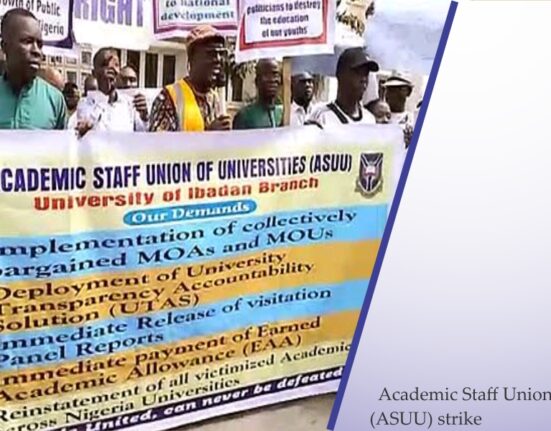
Onyeme, a former Bursar of the National Open University of Nigeria, said the persistent lack of funds has led to repeated industrial actions by both academic and non-academic staff.
According to him, this has made private universities more attractive, as they offer more predictable academic timelines. He also blamed poor research outcomes and widespread infrastructural decay on underfunding.
He advocated a mixed funding model as a solution to the crisis, emphasising that university bursars must now take on visionary roles in financial transformation.
He stated that many universities are saddled with decaying and abandoned infrastructure due to inadequate resources, adding that institutions should not depend on a single source of income.
Onyeme proposed a gradual increase in education funding over a five-year period. He suggested that the government move from the current 7 per cent to 9 per cent in 2026 and 11 per cent in 2027 and continue incrementally until the 15 per cent benchmark is reached.
He also recommended creating endowment funds and strengthening alumni engagement as further sources of funding. He emphasised the importance of universities establishing dedicated endowment offices to drive structured fundraising efforts.
Prof. Muhammad Mainoma, the former Vice Chancellor of Nasarawa State University, Keffi, urged the government to exempt all education-related matters from taxation. He argued that this would prevent taxes from diminishing the funds allocated to universities for intervention.
Mainoma advised bursars to manage available resources prudently, urging them to focus on strategic planning, accountability, revenue diversification, technology adoption, budget discipline, and effective stakeholder engagement.
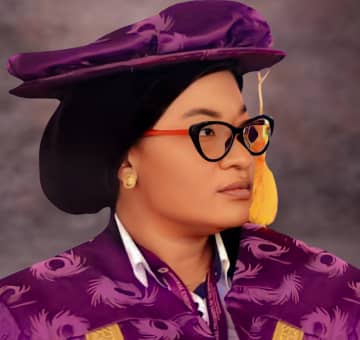
In her welcome remarks, the Chairman of the Association, Dr Hadiza Goje, described bursars as custodians of trust.
She likened their role in universities to that of an engine in a car, stating that no matter how beautiful a car appears, it cannot function if the engine is faulty.