
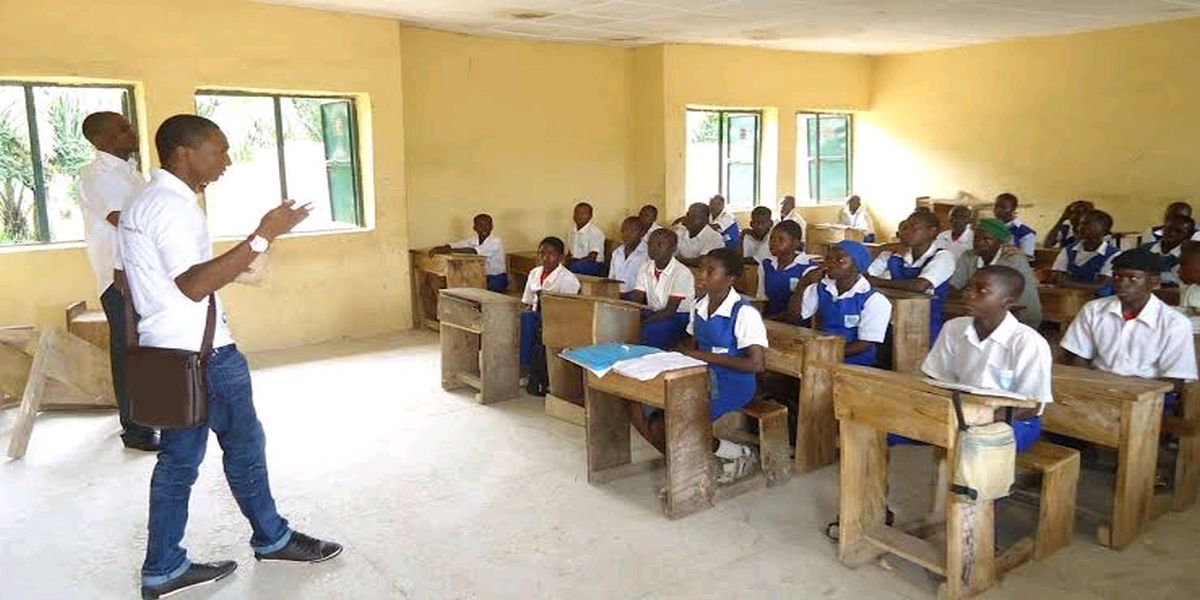
In Ejigbo, a community in Lagos State, a young boy named Emenike Ogbuja suddenly lost interest in going to school. Worried, his father was moved to ask him why. Emenike told his father that the school had hired a new teacher, the wife of the pastor who owned the school, but she was not trained to teach. Lacking classroom skills, she resorted to bullying. The experience was so painful for the child that he began preferring to stay in church on Mondays rather than attend class.
Emenike’s case is not an isolated one. Across Nigeria, many children are being taught by unqualified teachers, especially in private schools. Economic hardship has forced school owners to hire people who are not registered with the Teachers Registration Council of Nigeria (TRCN). Some are secondary school leavers waiting for university admission, while others are simply passionate individuals willing to work for very little pay.
A BusinessDay survey found several such cases in different parts of Lagos, including Oshodi, Okota, and Itire. In one instance, a young man awaiting admission into a university was put in charge of teaching a primary four class. In some training centres meant for teachers, unqualified people were even hired to teach the “future teachers.”
Iyabo Nnokam, a school owner in Rivers State, admitted that many private schools cannot afford to pay the salaries demanded by qualified teachers. She said that the current economic situation and the inability of parents to pay high school fees have pushed school owners to settle for unqualified hands. However, she also argued that some unqualified teachers, with training on the job, eventually perform better than certificate holders without practical skills.
This has stirred up a debate in Nigeria: should competence matter more than certificates? Some argue that paper qualifications do not always guarantee teaching ability. Nevertheless, others have insisted that without proper training, teachers will not be able to provide the necessary foundation that children need.
Gift Osikoya, a teacher in a foreign-owned Lagos school, explained that being “unqualified” often means not meeting minimum TRCN requirements, such as holding a National Certificate in Education or a degree in education. According to her, the situation is widespread. In the South-West, about 70 per cent of teachers in private schools are unqualified, and in some places, this figure can reach as high as 90 per cent.
She identified several reasons for the problem: school owners want to maximise profits, government supervision is weak, unemployment pushes many into teaching, and many lack proper classroom management skills. Unqualified teachers, she warned, negatively affect students’ performance, their ability to achieve their academic goals, and even their chances in life.
Stakeholders also worry that government regulators pay more attention to private schools, while many public schools remain unchecked. This creates a double problem: children in low-cost private schools are being shortchanged by untrained teachers, while public schools are not given the attention they deserve.
If this dangerous trend continues, the future of Nigerian students could be at risk. Without well-trained teachers, the Nigerian educational sector will suffer, and children may never reach their full potential in life.
Leave feedback about this