
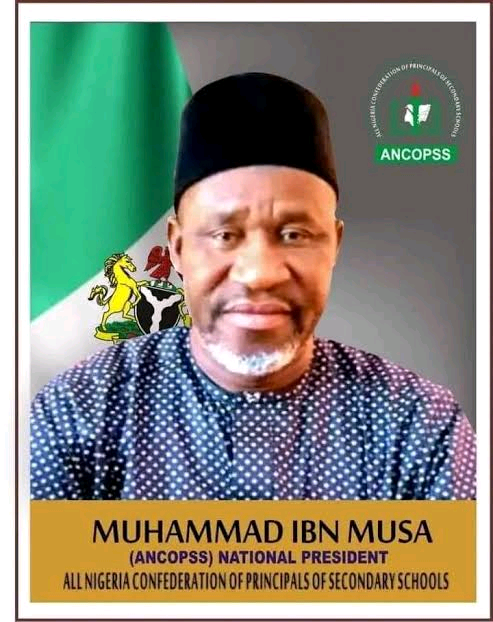
Alhaji Muhammad Ibn Musa, the National President of the All Nigerian Confederation of Principals of Secondary Schools (ANCOPPS), has shared his thoughts on why Ghanaian students continue to top the West African Senior School Certificate Examinations (WASSCE) despite Nigeria presenting the majority of the candidates in the region.
Speaking in an exclusive interview with TUNBOSUN OGUNDARE, Musa identified various factors contributing to the disparity in performance.
He explained that the blame does not rest solely with one group but is shared across several stakeholders, including teachers, students, parents, and the government.
Musa pointed out that while some Nigerian students are academically sound, many lack the right attitude towards their education.
He described how numerous students are satisfied with just passing their exams without striving for excellence, which he believes is a key issue.
According to Musa, many students are not adequately prepared for examinations like WASSCE, as they are often not encouraged to use online study platforms or engage in assignments during holidays. This practice was common in the past.
He pointed out that such negligence results in students underperforming in exams, citing examples like students scoring poorly in the Unified Tertiary Matriculation Examination (UTME) due to insufficient preparation.
Discussing the performance of Ghanaian students, Musa attributed their success to the country’s specialised secondary school system.
Unlike Nigeria, where schools are often comprehensive and less focused on specific fields, Ghana’s system allows students to attend schools tailored to their interests, such as science, commercial, or arts-focused institutions.
Musa added that this specialised approach has helped Ghanaian students achieve better results in WASSCE.
He further noted that Nigerian teachers, including principals, need to understand that their students compete within Nigeria and with peers from other countries in the West African Examination Council (WAEC) system.
Musa suggested that teachers need to improve how they prepare students for exams, particularly by making better use of classroom time and not focusing on unrelated topics.
He also discussed the issue of teachers’ involvement in marking exam scripts.
He explained that teachers who participate in marking WAEC or NECO exams are better prepared to teach their students since they understand the exact answers expected.
Unfortunately, many teachers do not participate in this process, which affects the quality of teaching and exam preparation.
The ANCOPPS president also addressed the problem of inadequate funding for teachers’ professional development.
He pointed out that many state governments no longer sponsor workshops for teachers, which hinders their ability to improve their teaching methods and subject knowledge.
Regarding the shift to paperless exams, Musa raised concerns about Nigeria’s readiness for the transition, especially considering the financial burden that will be placed on parents if the necessary infrastructure is not put in place.
He criticised the political hypocrisy of claiming to provide free education while failing to equip schools with the necessary resources.
Musa concluded by stating the need for a comprehensive review of Nigeria’s education system.
He argued that the curriculum should be updated to better prepare students for practical and vocational skills.
He also called for the appointment of qualified individuals in positions of authority within the education sector.



Leave feedback about this