
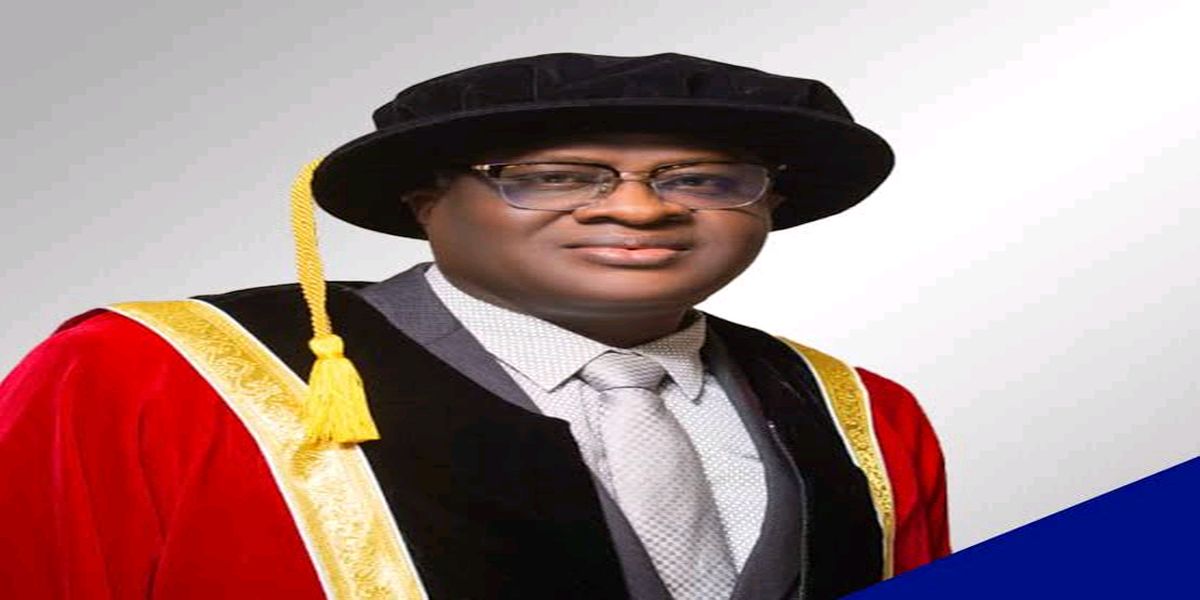
Silva Opuala-Charles, a professor of economics and founder of Garden City Premier Business School (GCPBS), has identified the disconnect between academia and the marketplace as a key reason why many researchers continue to struggle financially, despite publishing numerous scholarly works.
He made this observation during a training session in Port Harcourt for members of the editorial team of The Transformation Digest, a newly launched magazine by the business school. The session aimed to equip the team, primarily academics, with the skills necessary for operating effectively in a professional editorial setting. Facilitators included Mass Communication experts Dr Ijeoma Tubosia and Dr Jesse Okedi.
Declaring the training open, Opuala-Charles, a former banker and finance commissioner, stated that many Nigerian scholars remain impoverished because their research outputs do not translate into economic value. “Some have written up to 30 academic papers and still live in poverty,” he noted. “There is a missing link between scholarship and its relevance to the real world. That is why we initiated The Transformation Digest, to bridge that gap.” He said the magazine would spotlight academic research with practical recommendations and channel it to relevant policy and industry stakeholders for implementation, driving societal impact.
According to him, the business school prioritises research that supports both intellectual advancement and strategic transformation, but often these efforts fail to reach the policy and business ecosystems. The Transformation Digest, he said, was designed as a special-purpose vehicle (SPV) to connect scholarly insights with real-world application. “Our researchers here are generating valuable knowledge, but it is not reaching the market. Innovation, by definition, requires market access; without that, it is just theory. We must move these ideas to where they can generate value,” he emphasised.
He highlighted three core research pillars at the business school: Business Optimisation, Policy Research, and Institutional Research. These areas explore ways to scale enterprises, evaluate public policies (like monetary and tax reforms), and assess institutional performance and corporate social responsibility practices. Opuala-Charles stressed that the ultimate goal is to convey both explicit and tacit knowledge to those who make critical decisions. “The market must feel the impact of what we are producing intellectually,” he said.
He underscored the importance of strategic innovation, citing The Transformation Digest as an offshoot of the business school and a deliberate expansion initiative. “This is about turning knowledge into enterprise. It also equips people with new skills to increase their economic potential.” He explained that wealth creation follows a deliberate process. “Look at platforms like Arise TV and Channels; those are private sector-driven success stories. That is what we are modelling here.”
He urged participants to see the training as a capacity-building opportunity, regardless of their academic qualifications. Referencing Tubosia’s remarks on continuous learning, he suggested that GCPBS could evolve into a journalism training hub in the Niger Delta, possibly in partnership with the Nigeria Union of Journalists (NUJ).
Recalling a previous training for broadcast journalists conducted with support from a London-based institute, Opuala-Charles called for the revival and expansion of such initiatives. He said, “We can take this further. There is a serious vacuum in journalism training, and we are positioned to fill it.” He concluded by emphasising the power of conversation in generating fresh ideas and personal transformation; “Engagement like this brings new perspectives. It changes your thinking, and when your thinking changes, your life follows.”
Leave feedback about this