
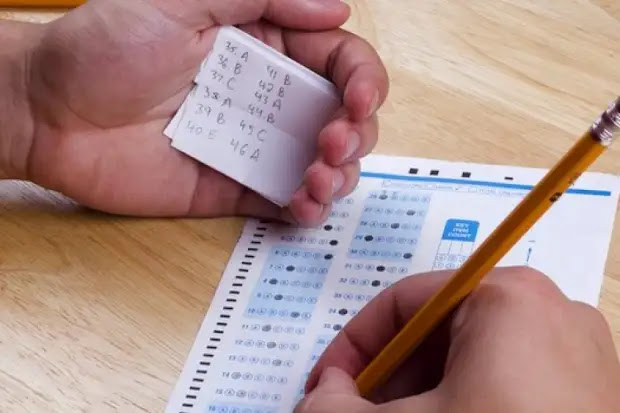
The Nigerian government has announced that it will establish a special court to swiftly punish individuals who cheat during examinations. This new court is part of a plan to address the growing issue of examination malpractice in the country.
The Minister of Education, Dr. Tunji Alausa, announced after receiving a report from a committee led by the Registrar of JAMB, Professor Is-haq Oloyede. The committee was tasked with identifying ways to enhance the quality of examinations in Nigeria and prevent cheating. One of their leading suggestions was to create a National Examination Malpractice Court.
Many Nigerians are asking if this new court can do what the old Law from 1999 could not. That Law, known as the Examination Malpractice Act, was enacted to punish individuals who cheat on examinations. However, from the time the Law was passed until now, very few people have been punished, and this has allowed cheating to worsen.
Take, for example, the 2023 WAEC, which had one of the highest cases of examination malpractice. That year alone, there were 262,000 cases of examination malpractice across the country— the highest in years. Moreover, these were only the reported cases. Some are not reported. Interestingly, students now use phones and gadgets to cheat, parents bribe teachers, and some school owners even help students cheat. Nevertheless, most of these people are never punished. Teachers say the system is broken, and no one is held responsible.
The 1999 law allowed judges to jail people for up to three years or fine them ₦50,000. However, experts say the Law was never really used. There were no special courts, no quick trials, and the government did not push hard enough to enforce it. As a result, people kept cheating because they knew they would not be caught or punished.
The new court is meant to fix all that. It will focus only on examination cheating cases. The plan also includes using students’ National Identification Numbers (NIN) on their certificates to stop people from pretending to be someone else. Teachers and supervisors at examination centres will also be tracked through their National Identity Numbers (NINs). All examination halls will be equipped with CCTV cameras, and officials will wear body cameras to record all activities during examinations. Every student will have a special ID number linked to their NIN from the time they enter primary school.
Dr Alausa said the government is serious this time and will do everything to stop examination cheating. He said the committee’s recommendations are feasible and straightforward to implement.
Many parents and teachers welcome the new move. Mrs Chioma Eze, a mother in Lagos, said children no longer take studying seriously because they believe they can always cheat and get away with it. She hopes this new court will instil fear back into the system and motivate students to work harder.
An education expert, Professor Ibrahim Danjuma, said the idea is good but warned that if the government does not fully commit to it, it may fail, just as the 1999 law did. He also said that the country must address the poor teaching in schools and reduce the pressure students face, or they will continue to look for ways to cheat.
As the government prepares to set up the court, many Nigerians are waiting to see if, this time, real change will happen or if it will end up as another empty promise.





Leave feedback about this