
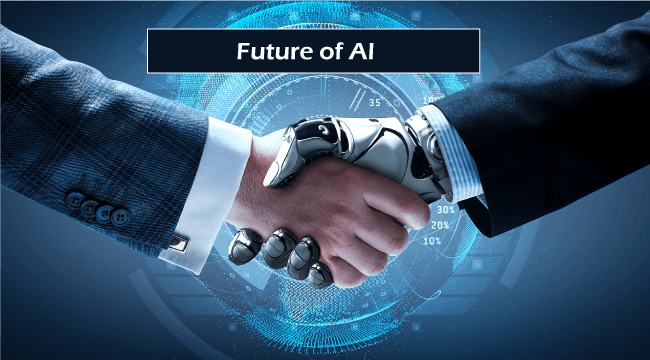
The world of artificial intelligence (AI) is shifting rapidly.
For years, companies raced to develop the largest and most powerful AI models, competing for superiority with each new iteration.
However, businesses are now realising that the future of AI is not about having the biggest model, but rather how well AI systems are orchestrated for efficiency, scalability, and cost-effectiveness.
This transformation is not just about advanced software; hardware plays a crucial role. The efficiency of AI depends on the combination of both software and hardware.
Companies that fail to adapt to these technological changes risk being left behind.
AI models, such as Grok-3 from xAI and GPT-4o from OpenAI, have revolutionised industries with their distinct capabilities.
Grok-3 excels in complex tasks like math and coding, while GPT-4o processes multiple data types, including text, images, and audio.
There are also cost-efficient models like DeepSeek R1, which challenges more expensive Western alternatives, and Google’s Gemini, designed for seamless enterprise use.
However, as powerful as these models are, no AI can handle every task.
That is where orchestration efficiently combines the best models for different purposes.
Companies are now developing AI ecosystems that route tasks to the most suitable model and hardware, balancing performance, cost, and scalability.
The role of AI hardware in this orchestration cannot be ignored. Specially designed chips like Google’s Tensor Processing Units (TPUs) and Apple’s Neural Engine are improving the speed and efficiency of model execution and reducing power consumption.
As AI moves toward being processed closer to devices such as smart cameras or autonomous vehicles, enterprises will be able to make real-time decisions with minimal latency, enhancing performance.
Businesses today need more than just a single AI model. They need to integrate multiple models and hardware solutions to optimise results.
The AI strategy for enterprises must include performance-based routing, cost efficiency, and seamless switching between models and accelerators.
This approach ensures scalability, enabling companies to adapt to growing AI demands.
The ultimate aim of AI orchestration is to create integrated enterprise applications.
By combining orchestrated models into scalable solutions, businesses can streamline operations and boost productivity.
AI-driven customer support, risk detection, and intelligent document processing are examples of how AI orchestration is already transforming industries.
Looking forward, businesses that master AI orchestration will be well-positioned to lead in innovation.
The challenge is no longer about building the most powerful AI and orchestrating it effectively to meet real-world business needs.
Companies that embrace this approach will have a competitive edge in the rapidly changing world of AI.

Leave feedback about this