
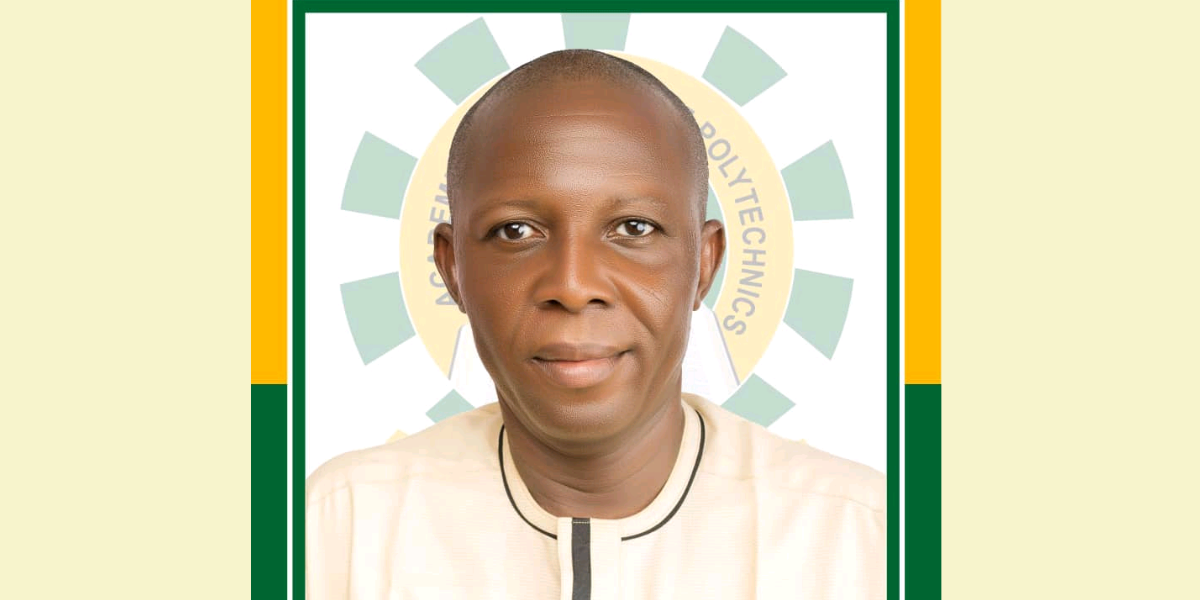
Comrade Shammah Kpanja, ASUP President
The Academic Staff Union of Polytechnics (ASUP) call for the Federal Government to establish a National Commission for Polytechnics has once again brought Nigeria’s long-standing problems in technical education to the forefront. While many see the idea as a step in the right direction, others believe it may simply become another layer of government bureaucracy with little real impact.
ASUP President, Comrade Shammah Kpanja, explained that polytechnics are currently the only part of Nigeria’s tertiary education system without their own regulatory body. While universities have the NUC and Colleges of Education have the NCCE, polytechnics are grouped under the National Board for Technical Education (NBTE)—the same board that supervises technical colleges and vocational centres. According to ASUP, this arrangement has weakened the quality control system in polytechnic education.
In a bid to strengthen the sector, the union insists that a dedicated commission will improve quality assurance, streamline accreditation, and enable Nigerian polytechnics to meet global standards.
Experts quickly note that in countries such as Germany, Singapore, and South Korea, technical and vocational schools are major drivers of national development. Their polytechnics produce highly respected graduates who are well paid and well utilised. Nevertheless, in Nigeria, HND holders still suffer discrimination in the labour market and public service, despite spending up to five years completing ND, IT, and HND. Kpanja says this unfair treatment is “not helping the growth of our country.”
However, some stakeholders are worried. Setting up another commission is a significant undertaking that requires substantial political will. Without deeper reforms, the new commission may end up as just another office building with no real power to address the significant issues: outdated curriculum, inadequate funding, collapsing laboratories, limited industry partnerships, and poor welfare for lecturers, whose salaries have not been reviewed since 2010. ASUP even noted that many Chief Lecturers cannot fuel their cars under current conditions.
Critics also question why the government is converting polytechnics into universities rather than improving technical education. They argue that polytechnics were established to train skilled workers to reduce unemployment and grow local industries.
At the ASUP conference in Plateau State, the Deputy Governor urged union leaders to embrace modern management and produce a new generation of visionary leaders.
Ultimately, establishing a Polytechnic Commission may be a good idea—but without adequate funding, respect for technical education, and clear national direction, it may not make much difference.





Leave feedback about this