
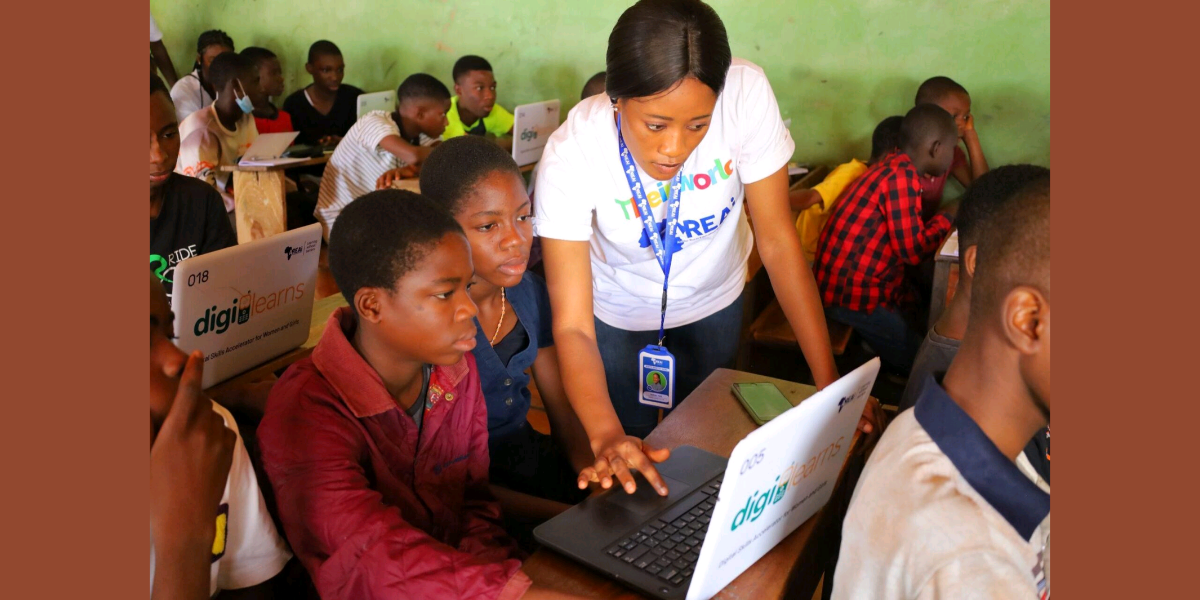
At a time when digital education has become mainstream in many countries worldwide, experts are concerned that Nigeria is being left behind. This reality is evident in Nigeria’s growing digital skills gap, which has become a national red flag, signalling an urgent need for intervention.
At a recent media dialogue in Lagos, UNICEF painted a sobering picture: millions of Nigerian youths are entering a digital world without the competencies to compete, innovate, or even participate fully. For a country blessed with a young population, this gap is becoming a significant threat to development.
UNICEF Education Specialist Babagana Aminu noted that Nigeria’s youth should be the country’s greatest strength, yet structural failures in education have left them vulnerable. With 70% of Nigerians under 35, the government should be producing digitally skilled, globally competitive graduates. Instead, there is a 60% mismatch between what schools teach and what employers actually need. “Every year, 3.5 million young Nigerians enter the labour market, yet more than half are unemployed or underemployed,” Aminu said. This failure is costing the country an estimated $11 billion annually—a staggering economic loss tied directly to poor digital readiness.
Experts who spoke at the function agreed that schools must take the lead in reversing this trend. They noted that Nigeria’s traditional education system remains heavily theoretical, with limited exposure to modern tools such as coding, data analytics, robotics, AI, and cybersecurity. If Nigeria continues to neglect urgent reforms, its teeming youth may miss the opportunity to become creators and inventors of technology; instead, they will become consumers. Education stakeholders insisted that integrating digital literacy into school curricula—from primary through tertiary—must be non-negotiable.
UNICEF’s Generation Unlimited Nigeria (GenU 9JA) initiative has already provided digital learning access to over 11 million young Nigerians. This shows what is possible when investment meets innovation. The programme
However, experts warn that this is only a fraction of what is needed. Schools must not rely solely on external initiatives; they must embed digital skill-building as a core function of learning.
Stakeholders also emphasised the need for continuous teacher training and access to modern teaching tools, noting that without digitally literate teachers, digitally skilled students are impossible.
Finally, the dialogue highlighted the media’s role. As Aminu noted, the media can amplify opportunities, influence public perception, and push policymakers toward real action.
Nigeria stands at a crossroads. If schools fail to act swiftly and boldly, the next generation may inherit a future they are unprepared to participate in. However, with proper investment, collaboration, and vision, the country can turn its youthful population into a powerful digital force.






Leave feedback about this