

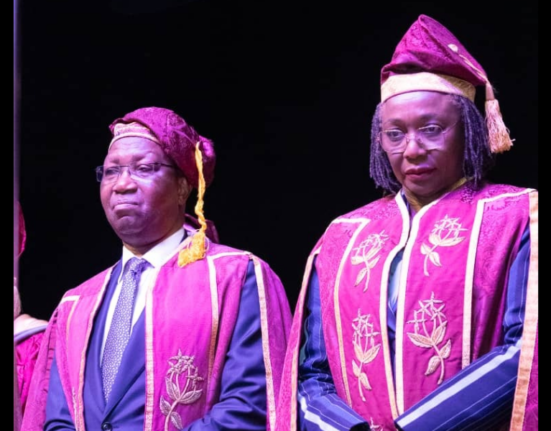
2nd Left, Ismaeel Ahmed and other participants at the recent LAUTECH annual lecture
At dawn in a small village in Sokoto State, 14-year-old Amina ties her headscarf, slips her exercise book under her arm and begins an eight-kilometre walk to school. The path is dusty, the heat unforgiving, and when she arrives, her classroom offers little comfort — no roof, no textbooks, and a teacher doing his best with the bit of training he has. Still, Amina sits upright, eager, sure that learning could one day change her life.
More than 700 kilometres away, another girl her age settles into an air-conditioned classroom in Lagos. Her lessons are digital, her teachers are fully certified, and her school environment is a world away from Amina’s. The gap between the two girls captures a growing reality in Nigeria: one country, two very different school systems.
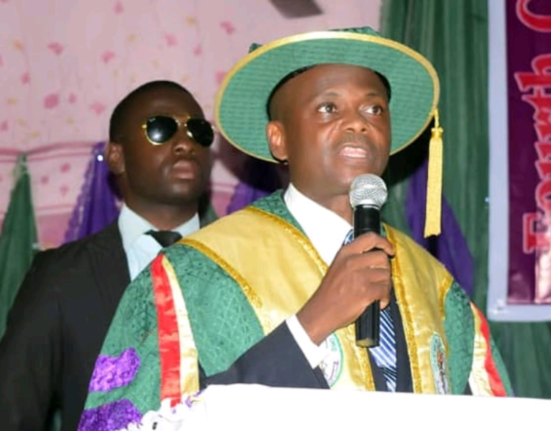
This divide was a central focus at the Ladoke Akintola University of Technology annual lecture, where legal practitioner Ismaeel Ahmed described education as the “clearest mirror of Nigeria’s inequalities”.
Nigeria has one of the world’s largest populations of out-of-school children — more than 10 million, according to UNESCO. In parts of the north, insecurity, poverty and social norms keep many children, especially girls, out of the classroom. Even where schools exist, the quality varies sharply. Some states record learning outcomes several times higher than others. Fewer than two-thirds of primary school teachers meet minimum qualification standards.
Nevertheless, feature stories also look for light within the gaps. In Lagos, the EKOEXCEL programme has retrained thousands of teachers and introduced structured learning in hundreds of schools. Education experts say examples like this show that improvement is possible with consistent investment and collaboration.
For now, Amina keeps walking to school each morning, her determination unchanged. Her story — and those of millions like her — raises a quiet but urgent question: how long can a country thrive when its children begin life on such unequal ground?


Leave feedback about this