
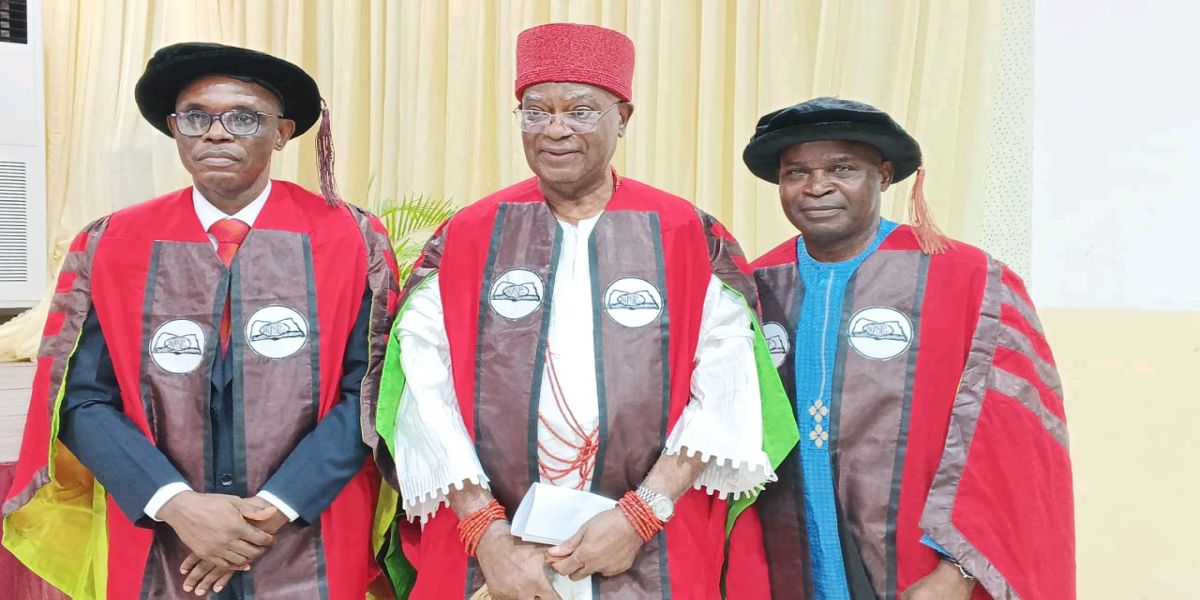
At the 27th Convocation of the Nigerian Academy of Letters in Lagos, the Obi of Onitsha, His Majesty, Igwe Nnaemeka Alfred Achebe, spoke strongly about the place of education in Nigeria’s future. Receiving the honorary fellowship of the academy on behalf of himself and two other awardees, the traditional ruler used the moment to remind Nigerians that no country can rise above the quality of its education system.
Education in Nigeria, he said, has long suffered from neglect, poor policies, and weak funding. For decades, the budget for education has ranked below defence, infrastructure, and even the National Assembly. On average, Nigeria has only spent about 7.8% of its national budget on education in the last 25 years—far below the UNESCO recommendation of 20–26%. Interestingly, African countries like Ghana, Kenya, and Senegal have consistently invested more than 20% in their education sectors.
This funding gap in the Nigerian educational sector has left most universities in the country struggling for survival. At the last count, 262 universities were operating in Nigeria, and over 90% were set up in the last 35 years, thus creating enormous challenges of staffing, infrastructure, and quality. Little wonder that many of these institutions operate without modern libraries, functional laboratories, or even adequate classrooms. More than half of these universities are private, with standards that vary widely.
The Obi of Onitsha also pointed out another problem: the “Japa” wave. Many of Nigeria’s brightest minds, lecturers, doctors, engineers, and young professionals—are leaving for better opportunities abroad. This brain drain, he said, is draining the nation of the very talent it needs for development.
Meanwhile, the world is moving fast with digital technology. Artificial intelligence and virtual learning are changing education across the globe. Universities in developed countries and other places abroad now hold online lectures, research collaborations, and even medical training sessions virtually. Nigeria could be left behind if it fails to urgently grow investment in digital infrastructure and prepare its students for this new reality.
Despite Nigeria’s internet penetration rising to about 60%, the country still lags behind Morocco, South Africa, and Kenya. To compete, the Igwe argued, Nigeria must not only fix past failures but also leapfrog into the digital future by embracing technology in education.
“Education is the cornerstone of building human capacity for national development,” he said. The question, however, remains: will Nigeria summon the political will to treat education as a true priority, or will it continue to trail behind while others race ahead?


Leave feedback about this