
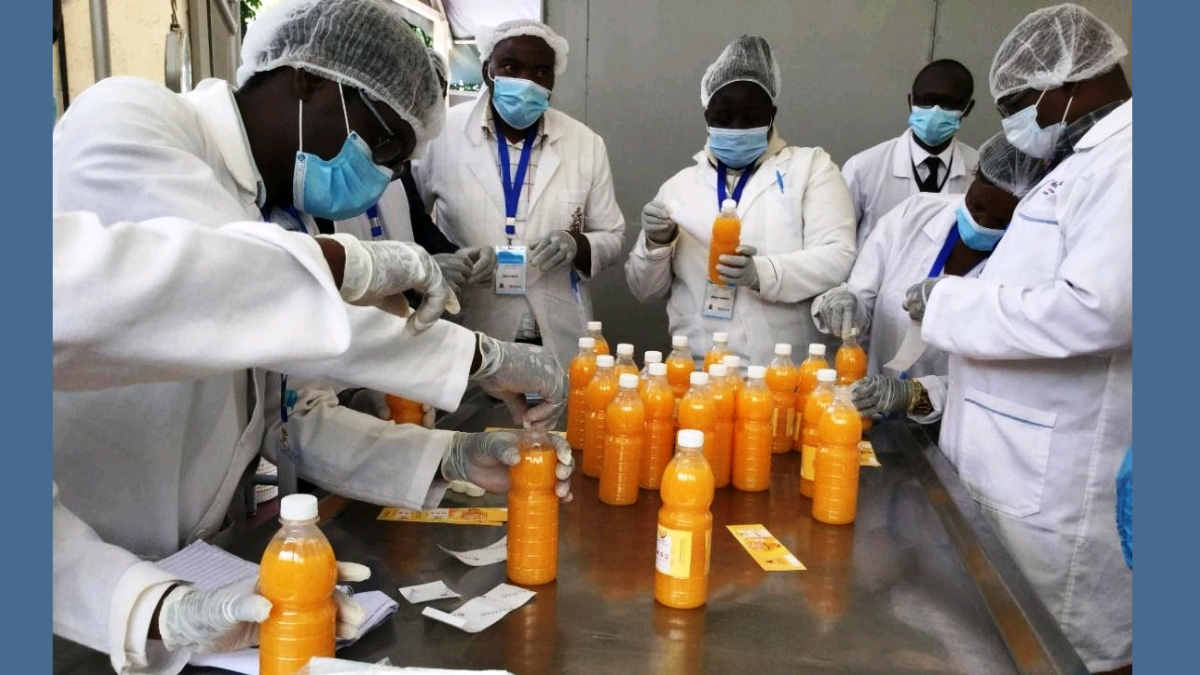
During DKCEF’s education tour of IITA in Ibadan, pupils got a rare chance to engage with real laboratory tools
A quiet but powerful shift is unfolding in Nigeria’s education space, as more organisations and government institutions are beginning to rethink how young people should learn science, technology, engineering, and mathematics. The focus is shifting from theory-heavy teaching to hands-on, curiosity-driven learning — a change many experts say is long overdue for a country seeking to build a competitive innovation economy.
A recent example is the Daniel King Educational Foundation (DKCEF), which is training 100 children and teenagers to become young food scientists by 2026. During an educational tour of the International Institute of Tropical Agriculture (IITA) in Ibadan, pupils had a rare opportunity to engage with real laboratory equipment, agro-processing equipment, and cassava breeding technologies. For many of the children — especially those from semi-urban and underserved communities — it was their first encounter with world-class STEM facilities.
Founder Daniel King explains that the goal is simple: spark interest early. “We want to nurture children and preteens into impactful innovators before they turn 20,” he says. Education experts have commended the initiative, adding that such exposure will not only help discover scientists at a young age but also help students connect science to everyday life while expanding their sense of possibility.
This push toward practical learning aligns with a broader national conversation about STEM readiness. Recall that a couple of years ago, the federal government launched the National Development Plan, which will see the country invest N924bn in science and technology over five years. The main objective of the development plan is to give greater attention to research, innovation hubs, and improved curricula across all levels of education in Nigeria. However, the challenges ahead remain formidable, as the country faces weak policy implementation, limited research funding, poor adoption of local technologies, and outdated STEM teaching methods, all of which can hinder sustainable progress if not addressed promptly.
At the moment, Nigeria’s research spending stands far below global averages. This, according to analysts, can slow down innovation and discourage young scientists. The government acknowledges this, stressing the need for stronger partnerships among industry, academia and government. As part of this effort, the state governments are required to play key roles. Their roles include hosting and supporting at least five innovation hubs each, and creating an ecosystem that enables ideas to move from the classroom to the marketplace.
Education stakeholders argue that this ecosystem cannot thrive without nurturing curiosity from childhood. That is why programmes like DKCEF are important and must be supported. They demonstrate that when young Nigerians are given fundamental tools, real labs and real problems to solve, their creativity expands.
As the country seeks to build a science-ready workforce, one thing is becoming clear: the future will largely depend on how early and how boldly we empower children to learn by doing.





Leave feedback about this