

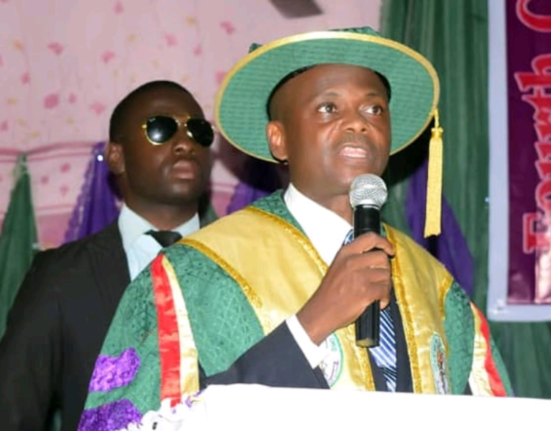
Dr. Lawal Olohungbebe, Kwara State Commissioner for Education and Human Capital Development
In a move that signals a significant shift in how public education is managed, the Kwara State Government has fully moved the registration for the Common Entrance Examination for Primary Six pupils to an online platform. Announced during the first-quarter Inter-Ministerial Press Briefing in Ilorin, the Commissioner for Education and Human Capital Development, Dr Lawal Olohungbebe, said the digital transition is designed to cut out bottlenecks and make the process smoother for parents, teachers and administrators.
Education watchers say the decision aligns with a broader national push for digital literacy, but what stands out is how Kwara is packaging these reforms into a complete ecosystem. One example is the newly launched “Commissioner-to-Classroom” (C2C) initiative—a programme that brings top education officials closer to real classroom challenges. Through its helpline, pupils can now report issues affecting their safety and learning directly. Stakeholders believe this is a step forward in tackling the growing issue of school safety and students’ welfare.
Dr Olohungbebe explained that the success of the state’s flagship intervention, KwaraLearn, has been the foundation for this new digital direction. The programme, which has moved classroom operations from analogue to digital, is already reshaping how teachers teach and how pupils learn. According to him, pupils are now exposed to tools and methods that help them compete globally with their peers, a development that has also led to a noticeable rise in school enrollment across the state.
To sustain the gains, about 1,800 teachers across the sixteen Local Government Areas have been trained in modern teaching methods. According to government officials, the teacher training initiative is essential to help teachers, especially in rural areas, acquire the skills necessary to drive the state’s digital literacy Platforms. Experts noted that technology alone cannot drive change without skilled teachers who understand how to use it effectively. Another important step taken to ensure the innovation works as expected is the deployment of Quality Assurance Officers, whose responsibility is to monitor teaching activities in line with the National Education Quality Assurance Policy.
Beyond digital learning, Governor AbdulRahman AbdulRazaq’s administration has invested in infrastructure, including the construction and renovation of 35 schools and the distribution of new laboratory equipment across the three Senatorial Districts.
The state is also pushing for inclusive education through the World Bank-supported Adolescent Girls Initiative for Learning and Empowerment (AGILE). The goal: equip 28,000 schoolgirls with digital skills in 70 public secondary schools.
At the adult level, the Agency for Mass Education has revived literacy programmes and vocational training, including a “Literacy by Radio” programme on Midland FM 99.1—an innovative step towards eradicating illiteracy. Indeed, these initiatives clearly reflect Kwara State’s deliberate efforts to reinvent its



Leave feedback about this