

As the world rushes into the age of Artificial Intelligence (AI), Nigeria is trying hard not to be left behind. In this regard, the country recently recorded a significant milestone in its digital journey with the launch of a $500,000 Artificial Intelligence (AI) Scaling Hub, backed by the Bill & Melinda Gates Foundation. The initiative, led by the Federal Ministry of Communications, Innovation and Digital Economy, is designed to support innovators building AI solutions for health, agriculture, and education — sectors that directly affect small businesses and vulnerable communities.
During the signing in Abuja, Minister Dr Bosun Tijani described the hub as a platform that will bring innovators, government players, and private-sector actors together to use AI to solve real problems. “This is about identifying and scaling ideas that improve lives and unlock business opportunities,” he said.
The Gates Foundation’s Nigeria Country Director, Uche Amaonwu, added that Nigeria must empower local talent if the project is to create real impact, especially for small business owners, farmers, and educators who stand to benefit from AI-powered tools. Nevertheless, while Nigeria dreams of an AI-powered economy, its politics tells a different story — one stuck in the analogue past.
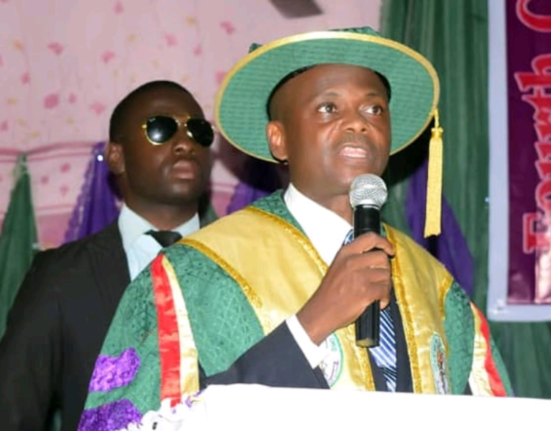
Across nine states in just ten months, Nigeria has seen frequent cabinet reshuffles, with key commissioners removed or redeployed without warning. These unstable political decisions have disrupted major innovation projects nationwide. In Ekiti, the ambitious Ekiti Knowledge Zone (EKZ) — conceived as a mini–Silicon Valley — has suffered delays for 12 years. The commissioner who is in charge of the project, Seun Fakuade, was removed in August 2025, leaving the project hanging and the ministry without a replacement months later.
Similar stories echo across Ebonyi, Niger, Oyo, Kano, and Rivers States, where innovation hubs, digital cities, and ICT universities are stuck due to poor continuity and political interference. Even federal innovation cities worth over $10 billion remain primarily on paper.
Fakuade, reflecting on his experience, said Nigeria’s political system is fundamentally unfit for a digital future. “We recycle mediocrity and wonder why nothing works,” he lamented, adding that many commissioners appointed to drive digital transformation do not understand digital infrastructure, skills development, or the future of work.
The problem, experts say, is deeper than appointments. AI requires data, infrastructure, talent, and coordination — yet Nigeria lacks a unified national strategy. “The Minister of Innovation has never convened a meeting with state commissioners,” Fakuade noted. Without alignment, Nigeria cannot build a functioning AI ecosystem.
The cost of this political disorder is human. Delayed projects mean millions of young Nigerians lose opportunities to learn, earn, and innovate. “The digital economy can feed Nigeria,” Fakuade insisted. “But we are starving it with bad politics.”
For Nigeria’s AI future to succeed, experts argue, the country must fix its governance structure, ensure continuity, appoint competent leaders, and hold public officials accountable. Otherwise, Nigeria will keep launching big ideas while the foundations remain too weak to carry them.




Leave feedback about this