
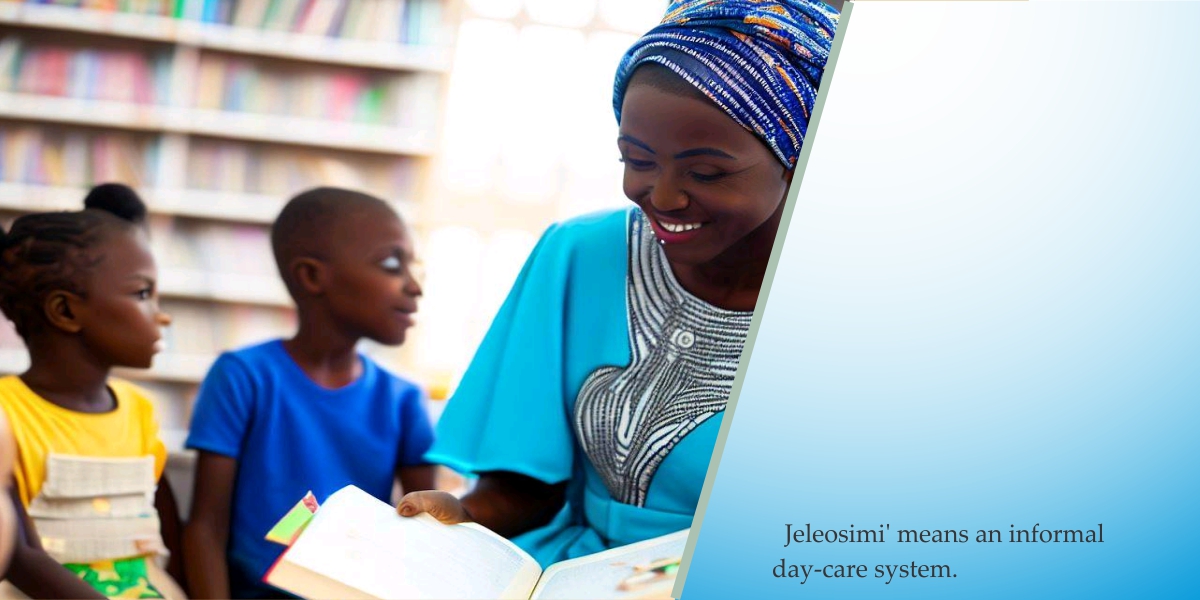
When Mrs Chizoba Darlington drops off her two-year-old son at a “Jeleosimi” centre in her neighbourhood, she feels a mix of relief and resignation. Relief, because she can go about her daily business without distraction. Resignation, because she never imagined she would have to rely on what was once seen as a modest day-care option for families of low income.
“Private schools are just milking parents,” she says. “I pay ₦20,000 per term here, compared to the ₦300,000 or more the big schools ask for toddlers. What exactly is a two-year-old learning that costs that much?”
The Yoruba word Jeleosimi means “let the household have peace.” It once described a simple, informal day-care system — a place to keep children aged one to five safe and occupied while parents worked. However, today, amid Nigeria’s worsening economy and rising cost of education, Jeleosimi centres are making a comeback across cities such as Lagos, Ibadan, and Akure.
Once seen as the preserve of low-income households, these centres are now drawing parents from middle-class backgrounds — many of whom are struggling to meet private school fees that have doubled or tripled in the past two years.
Findings show that pre-kindergarten fees in some private schools now range from ₦200,000 to over ₦900,000 per term, often accompanied by extra charges for uniforms, development levies, books and health fees.
For Mr Olorunfemi Bamikale, a company driver, the decision to enrol his three-year-old twins in a Jeleosimi centre was a simple matter of economics. “A school gave me a list totalling ₦859,700. That is the money I could use to buy land,” he says. “Even their teachers do not earn ₦100,000 a month.”
Teachers themselves say the burden is not entirely the schools’ fault. Mrs Aduramigba Okunbor, who teaches at a private primary school, explains that rising inflation and government standards have pushed schools to increase their rates. “Running a school requires constant spending on infrastructure, books, and welfare. Everything has gone up — from chalk to diesel,” she says.
Nevertheless, for many parents, the arithmetic no longer adds up. More families are moving their children to public schools or cheaper community lessons. Others are keeping toddlers in Jeleosimi until they are old enough for basic education.
What began decades ago as a convenient childcare solution has now become a refuge from Nigeria’s economic hardship, a quiet reminder that, for many parents, the cost of giving children a head start in life is slipping further out of reach.



Leave feedback about this