
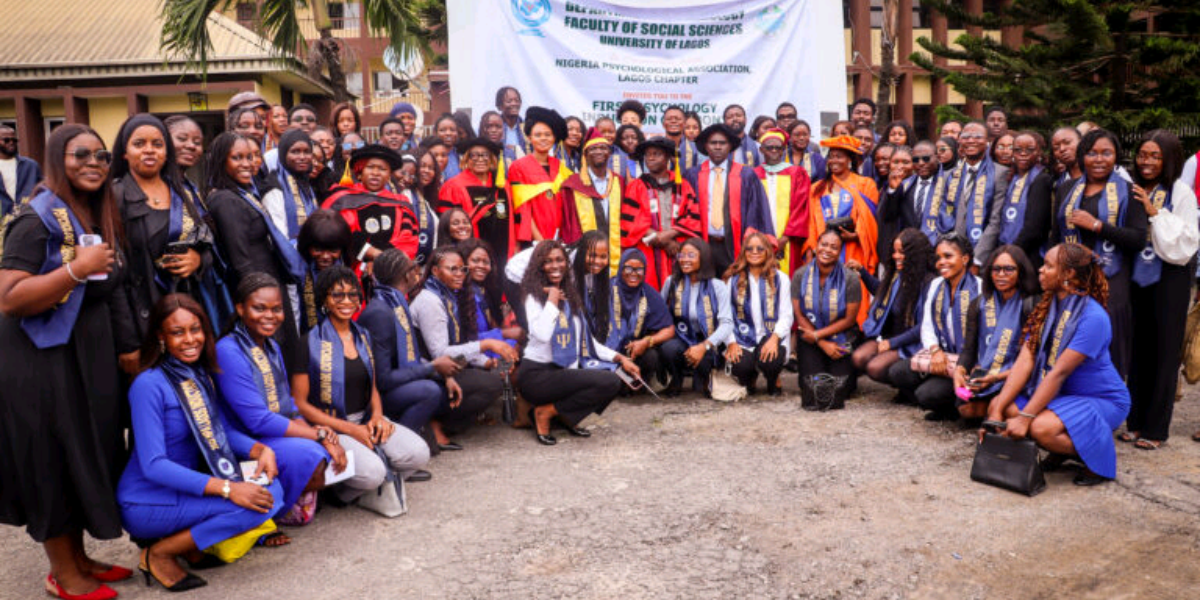
Maiden Induction of UNILAG Students into Nigeria Psychological Association, recently
When most of us think of psychology, we picture classrooms, textbooks and exams — theories about how people think, experiments in labs, and neat definitions to memorise. However, as Dr A. C. Obosi told delegates at the conference, Psychology Beyond the Walls of School, psychology is far more than an academic subject: it is a practical toolkit for living, learning and fixing problems in communities around the world.
“Psychology helps explain why people act the way they do,” Dr Obosi said. “It tells us how to solve problems, how to support each other, and how to build healthier lives.” That simple idea opens a wide door. Trained psychologists are not confined to clinics or lecture halls; they work in schools, hospitals, corporations, community centres, NGOs and government offices. Their aim is the same everywhere: to help people cope better and to make systems — families, workplaces, health services — work more kindly and well.
Take education. Beyond testing and theory, psychology shapes how children with learning difficulties are taught, and how parents and teachers design playful, practical ways for young minds to grow — whether in a London primary school, a community centre in Lagos, or a remote learning hub in South America. Small changes in how lessons are planned, or how adults respond to a struggling child, can make a lasting difference.
In health and social care, psychologists lead campaigns to reduce stigma around mental illness and to encourage people to seek help. They help patients live with long-term disease, guide behaviour change — for example, quitting smoking or managing stress — and run workshops on coping skills. Community-based programmes, often run by local NGOs or health departments, draw on psychological insights to build resilience and strengthen social ties.
The workplace is another global stage for psychology. Organisations that pay attention to employee well-being see better teamwork, more transparent communication and less conflict. From multinational firms to small family businesses, applying psychological principles can improve productivity and reduce workplace stress.
Technology has widened psychology’s reach. Developers and clinicians now build apps for remote therapy, create online peer-support groups and use social media to spread mental-health tips. In many countries, simple messaging groups and low-cost digital tools bring support to people who might otherwise have no access to care.
At the community level, psychology fuels social change. Awareness campaigns, local workshops and peer networks work to shift attitudes about neglected diseases and mental health. These efforts are practical and local, but their effects ripple outward: healthier habits, stronger families and more open conversations about problems that were once kept hidden.
Why does this matter to you? Psychology equips ordinary people with the skills to understand themselves and others, resolve conflict, and lead small but steady change in families, workplaces, and neighbourhoods. It is not only for those who will sit exams or specialise; it is for anyone who wants to make life better where they live and work.
As Dr Obosi urged his audience, do not see psychology as something that stops at the classroom door. Put on your thinking cap, find a niche that fits your interests, and use what you learn to solve real problems. Small, steady actions informed by psychology can change lives — and, quietly, the world.





Leave feedback about this