
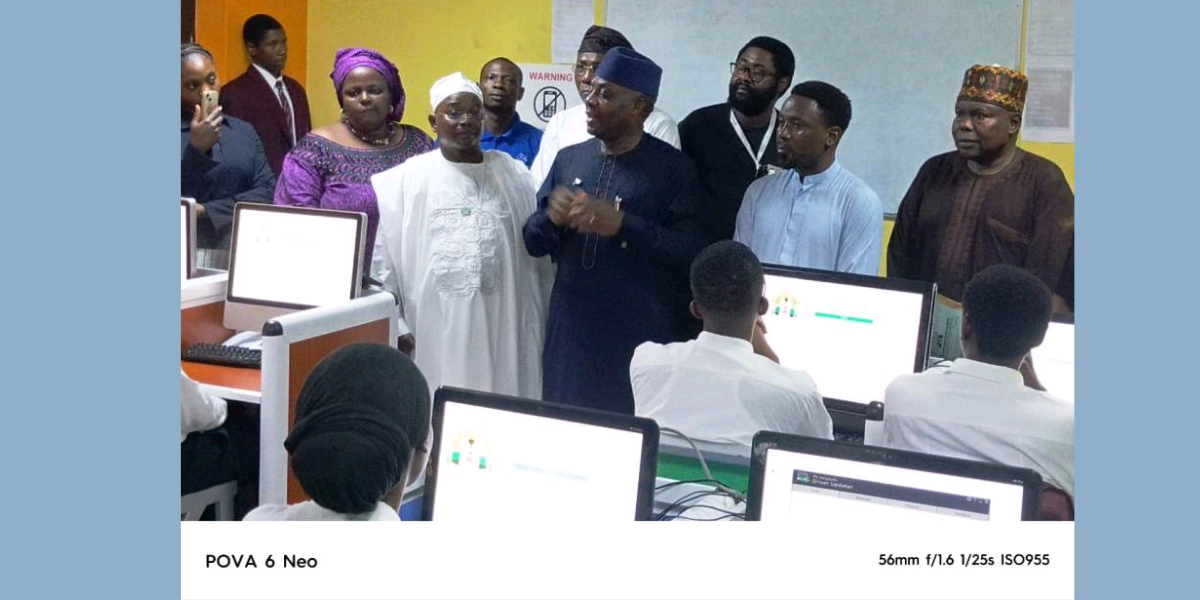
WAEC insists on complete CBT switch for WASSCE by 2026
As the West African Examinations Council (WAEC) insists on rolling out a fully computer-based WASSCE in 2026, fresh worries are rising across Nigeria—especially in rural communities where electricity, computers, and internet access remain luxuries.
From Enugu to Abia, parents, teachers, and students say the transition, though innovative, risks widening Nigeria’s already deep educational inequality. Many argue that the policy looks good on paper but fails to match the reality on the ground.
In Ndeaboh, Enugu State, 17-year-old Mary Nwankwo says her school has neither a computer lab nor electricity. “How can we write CBT? We do not even know how to turn on a computer,” she lamented. A similar fear came from Okorie Agu in Abia State, who called the plan “a design for mass failure,” insisting that many rural schools have not seen a functional computer in years.
Researchers share the same concern. Joseph Fehintola of the University of Ibadan explained that thousands of secondary school students lack even basic computer literacy because their schools lack ICT facilities. “Some teachers also struggle with computer use,” he added.
Nigeria has more than 23,500 secondary schools, yet access to digital tools remains uneven. Public schools, especially in rural communities, are hit hardest. Education experts have warned that rushing into CBT could create a two-tier system—one for well-equipped urban schools and another for under-resourced rural learners.
Security is another issue. Teachers fear that early-morning travel to centralised CBT centres may expose students to kidnappers or violent attacks, especially in remote communities where security presence is weak.
Still, WAEC remains confident. At a press briefing in Umuahia, the Head of WAEC Nigeria Office, Dr Amos Dangut, assured that the Council’s mapping strategy will ensure that no candidate travels more than two kilometres to a CBT centre. He stressed that WAEC has evaluated schools nationwide and developed a framework that ensures fairness and safety.
However, not everyone is convinced. At the Editors’ Conference in Abuja, Labour Party’s 2023 presidential candidate, Peter Obi, stated bluntly that most schools are not ready. “Where are the laptops? How will millions of students write CBT when the tools are not there?” he queried.
While many stakeholders agree that digital examinations are the future, the consensus is clear: Nigeria must first fix power, equip schools, train teachers, and ensure security. Without these, a full CBT WASSCE may end up hurting the very students it aims to uplift.





Leave feedback about this