
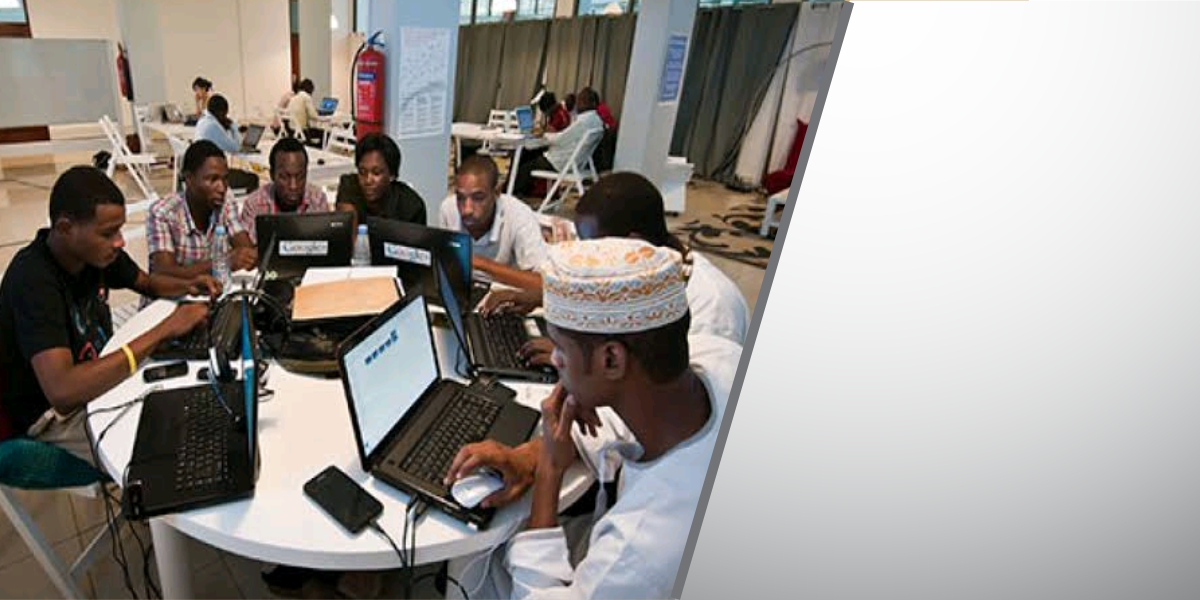
The job market is changing fast, and in Nigeria, the message is getting clearer every day, skills now speak louder than certificates. Employers today want people who can deliver results, not just quote theories. The era when a university degree guaranteed a good job is fast disappearing. These days, what truly matters is what you can actually do.
Across many sectors, banking, tech, media, and even manufacturing, companies now look for people who can think creatively and solve real problems. With technology dominating most industries, skills like coding, digital marketing, data analysis, and cybersecurity are now in high demand. Many companies in Nigeria and abroad now prefer people with practical experience rather than just paper qualifications.
This change is evident in Nigeria, where years of strikes, outdated teaching methods, and poor facilities have weakened the traditional education system. As a result, many young people are now learning practical skills on their own. Whether it is graphic design, app development, or video editing, these young people are turning online platforms and skill hubs into vibrant classrooms.
Take, for example, Chibuzor Obiora, a former TV presenter in Lagos. He did not study computer science, but he joined a tech training programme and taught himself coding. Today, he works for foreign clients and earns in dollars. “What mattered was what I could build, not the school I went to,” he said proudly.
Interestingly, some forward-thinking Nigerian universities are now leading a quiet revolution, integrating vocational and entrepreneurial training into their core curriculum.
At Redeemer’s University, Ede, Vice-Chancellor Prof. Shadrach Akindele explained that every student must now register for a vocational course alongside their main degree programme, whether in computer programming, farming, or graphic design. “By the time they graduate, they leave with two certificates, one in their course of study and another in a chosen vocation,” he said. “Our goal is to produce entrepreneurs who will stay and create jobs here, not run abroad in search of greener pastures.”
Similarly, at Ekiti State University (EKSU), Vice-Chancellor Prof. Edward Olanipekun said the institution has made vocational training compulsory for all students, including those in medicine. “We are ensuring that all our graduates master one skill or the other before they leave the university,” he noted. “The university is ready to support them to set up their own businesses after graduation.”
The same policy applies at the Adeyemi Federal University of Education (AFUED), where the acting Vice-Chancellor, Prof. Samuel Akintunde, has established an Entrepreneurship and Vocational Development (EVD) Centre. “All students must learn a skill and be certified in it before they graduate,” he said. “From catering to agriculture and hospitality management — our goal is to produce job creators, not just job seekers.”
Also, Afe Babalola University, Ado-Ekiti (ABUAD) has made it mandatory for all students to obtain a Certificate of Proficiency in one modern foreign language, either Chinese or French, with scholarships to study abroad. The idea, according to the university, is to prepare globally competitive graduates who can adapt anywhere in the world.
Even big global firms like Google and IBM no longer insist on university degrees. They care more about what candidates can do. In Nigeria, Prof. Idris Bugaje, the Executive Secretary of the National Board for Technical Education (NBTE), has repeatedly said: “If you have a skill without a degree, you can still get a good job. However, if you have a degree without skills, you may go nowhere.”
While degrees still matter in professions like law, medicine, and engineering, the reality is apparent: the future belongs to doers. In today’s Nigeria, skills have truly become the new certificate.
Leave feedback about this