
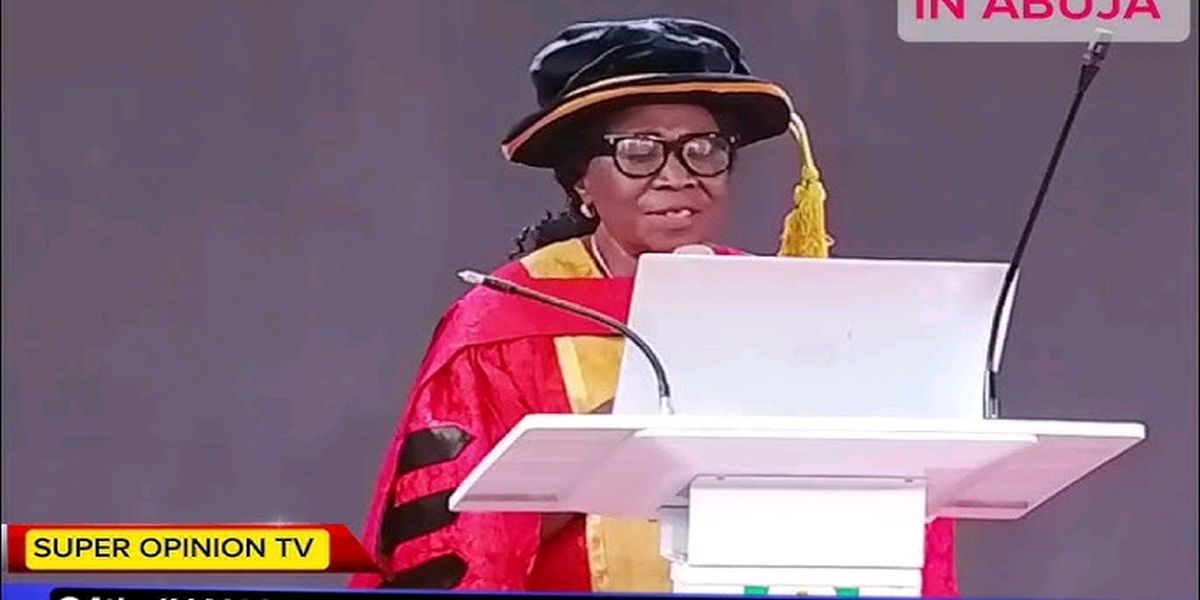
Professor Chibuogwu Virginia Nnaka of the National Open University of Nigeria (NOUN) has asserted that only robust teacher education can effectively dismantle systemic gender barriers in Science, Technology, Engineering, and Mathematics (STEM). She emphasised that professional training for educators is fundamental to fostering gender equity in STEM education and career pathways.
Professor Nnaka, a renowned advocate for gender equity in science and technology, asserted while delivering the university’s 34th Inaugural Lecture, titled “Professional Teacher Education: A Catalyst for Widening the Gateway to Gender Equity in STEM Education and Careers”. The lecture took place at NOUN’s headquarters in Abuja.
Addressing a gathering of academics, policymakers, and stakeholders in education, Nnaka argued that achieving gender equity in STEM must be the result of deliberate, strategic, and policy-driven interventions, rather than mere coincidence. “Teacher education is the bedrock of equitable STEM learning,” she said. “Teachers are often the first point of contact learners have with STEM. They must be professionally trained to challenge cultural biases, dismantle stereotypes, and mentor girls through their academic journey.”
She stressed that teachers play a dual role — they can either reinforce inequality or become agents of inclusion — depending on how they are trained. Nnaka described STEM not just as an academic pursuit but as a critical driver of innovation, industrialisation, and national development. Expressing concern over the persistent underrepresentation of women and girls in STEM fields, she cited it as a significant developmental challenge for Nigeria. Nigeria travel packages
According to global statistics, fewer than 30 per cent of researchers worldwide are women. In Nigeria, only about 17 per cent of students enrolled in tertiary STEM programmes are female. She attributed this disparity to persistent cultural norms, gender stereotypes, inadequate mentorship, and male-biased curricular content, all of which create formidable barriers to girls’ participation in STEM. “When women are missing in STEM, half the population’s potential is lost. Innovation becomes stunted, and national development suffers,” she warned.
Leave feedback about this