
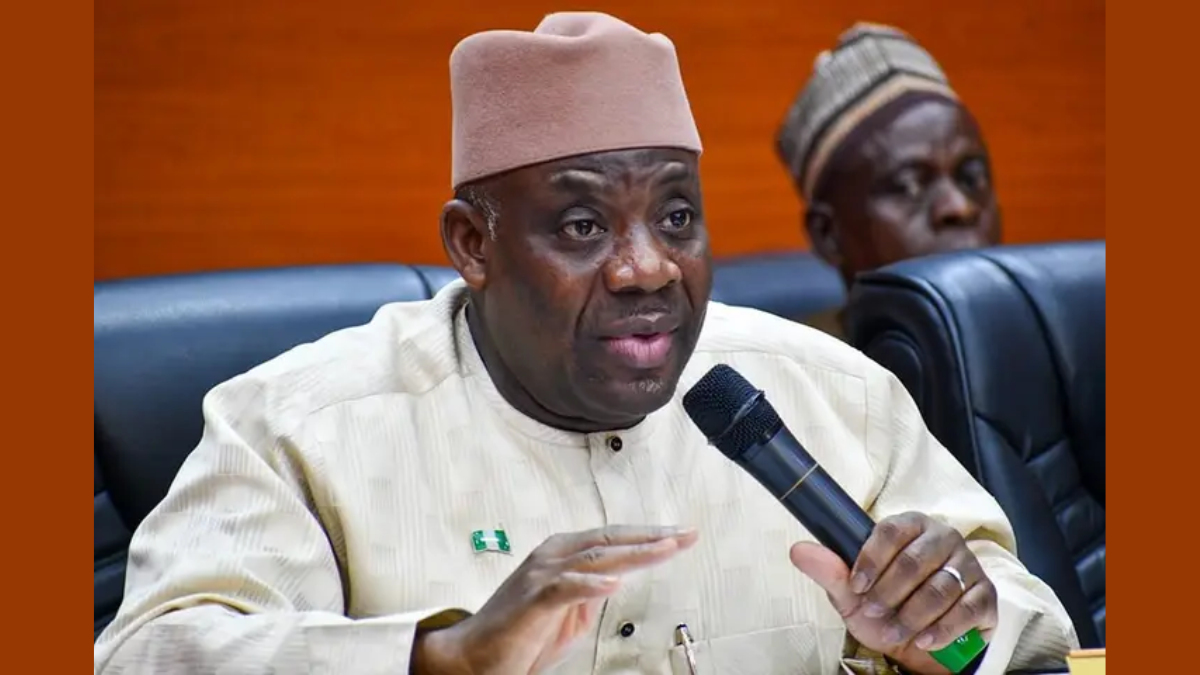
Dr. Tunji Alausa, Minister of Education
The Federal Government’s decision to scrap the Bilateral Education Agreement (BEA) scholarship has opened a heated national debate. At the centre of the argument is a simple but troubling question: Is Nigeria really spending too much to train just 1,200 students abroad—or is the programme a victim of poor planning and even poorer priorities?
For years, the BEA scheme was celebrated as one of Nigeria’s most prestigious educational investments. However, by 2025, the programme had entered crisis. Scholars studying in countries such as Hungary, Russia, China, and Morocco went months without receiving their $500 monthly stipends. Many of the students now survive on charity, others have taken up illegal jobs, and one student reportedly died in Morocco due to extreme hardship. By early 2025, 11 months of unpaid allowances had piled up.
The Minister of Education, Dr Tunji Alausa, defended the government’s decision to end the programme, pointing to staggering costs. “In 2025 alone, we projected N9bn for 1,200 students,” he said. “Meanwhile, millions of students in Nigeria get no support.” He also described the cost of sending 60 students to Morocco—N650m—as “unfair and unsustainable.”
Nevertheless, analysts argue that the debate goes deeper than the numbers. A breakdown of the N9bn budget shows that Nigeria spends roughly N7.5m per scholar per year—an amount that could build laboratories, fund research grants, or support thousands of local students if invested at home. At the same time, education experts warn that the issue is not simply cost but value. “Foreign training builds global exposure, networks, and advanced skills that our universities currently cannot offer,” said one policy analyst. “You cannot develop a modern economy with only local capacity.”
Critics of the cancellation say the real problem is mismanagement. Payments were inconsistent, record-keeping was poor, and monitoring was almost nonexistent. “You do not burn down a house because of a leaking roof,” a former BEA beneficiary noted. “Fix the system instead of killing it.”
However, the government insists the new policy will redirect funds to domestic scholarships and infrastructure. The debate now is whether this shift will strengthen Nigeria’s higher education system—or leave the country more isolated in a world driven by global knowledge exchange.
For stranded BEA scholars still protesting unpaid arrears, the controversy is not theoretical. It is a daily struggle, a broken promise, and a reminder of how much is at stake when policy decisions overlook the human beings behind the numbers.




Leave feedback about this