
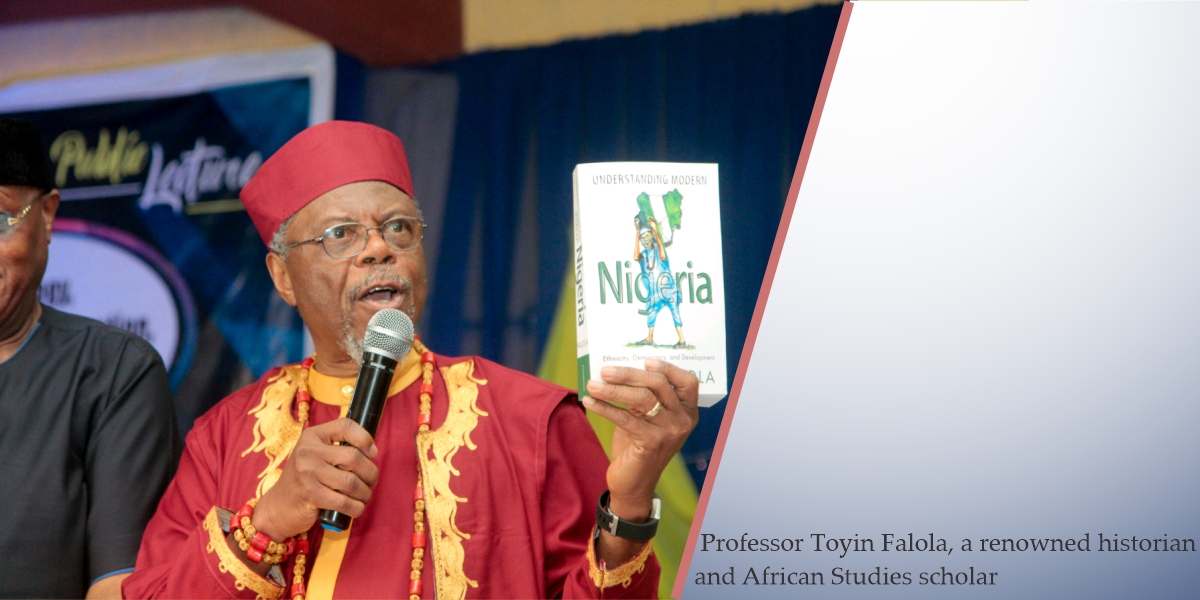
When Professor Toyin Falola stood before students and staff at Karl Kumm University, Vom, to deliver the institution’s first distinguished lecture, his message was loud and clear: Africa’s future depends on how it rethinks education today.
Education, he argued, has always been tightly linked to power — political, economic, and social. From colonial times to the present day, schooling in Africa has been used both to empower and to control. Furthermore, if we are to break away from cycles of poverty, inequality, and underdevelopment, then education must become a powerful tool for transformation, not just a path to certificates.
The heart of the problem, Falola said, lies in history. Colonial powers established education systems in Africa not to aid the growth of Africans, but to serve their economic interests. Schools were designed to produce a small group of literate Africans who would help manage the colonial system, not to lift entire communities. This design sidelined African languages, cultures, and indigenous knowledge, replacing them with foreign ideals that still dominate classrooms today.
Decades after independence, many African countries continue to operate education systems shaped by their colonial legacy. Western knowledge is prioritised over local content. Foreign languages remain the medium of instruction, excluding millions who struggle to teach them effectively. Academic theory is valued more than practical skills, even though the job market is crying out for electricians, farmers, coders, and creators.
For Falola, this outdated model is no longer acceptable. Africa is at a critical point. The continent’s population is growing rapidly, particularly among the young. This could either be a blessing or a disaster, and education is the deciding factor. If governments continue to underfund schools and neglect teachers, millions of young Africans will be left behind. However, if we invest wisely in inclusive, practical, and locally relevant education, then Africa’s youth can lead a new era of development, innovation, and economic growth.
The way forward is clear. Education systems must shift focus from rote learning to skills that matter today: creativity, critical thinking, leadership, and digital literacy. Vocational training must be treated as equal to academic education. Indigenous knowledge must be respected and integrated into school curricula. Moreover, most importantly, rural and poor children must not be left out.
Technology offers considerable opportunities to bridge the gap. With the proper infrastructure and teacher training, online platforms can deliver quality education even in remote villages. However, this requires political will and adequate funding.
Ultimately, Falola’s call is straightforward: Africa must stop treating education as a ritual and start treating it as a revolution. Until we reimagine education, our dreams of development will remain just that — dreams. However, with bold reforms, African schools can rise to become engines of change, and classrooms can become the starting point of a brighter, stronger continent.
Leave feedback about this